
A Massachusetts patient may find the right partial hospitalization program, intensive outpatient program, or outpatient therapist, only to hear one more condition before care can begin: the insurance plan must approve it. Symptoms may already be disrupting sleep, work, relationships, or safety, yet the next step appears to depend on forms, clinical notes, and an insurer's review.
That pause can feel personal, but prior authorization is a coverage checkpoint, not a judgment about whether someone deserves help. The process becomes easier to manage when patients and families understand who handles each step, which information matters, what new decision timelines mean, and how to protect continuity while waiting. For readers researching finding psychiatric care in Florida, the same basic lesson applies in Massachusetts: fast access depends on both clinical preparation and insurance coordination.
Table of Contents
- Introduction to the Prior Authorization Journey
- What the Prior Authorization Process Really Means
- Why Behavioral Health Services Require Prior Authorization
- How the Prior Authorization Process Works Step by Step
- Timelines Denials and What to Expect While You Wait
- Practical Tips to Expedite Your Prior Authorization Approval
- Next Steps with Cedar Hill Behavioral Health in Massachusetts
Introduction to the Prior Authorization Journey

Consider a person in Southborough who has reached the point of asking for structured behavioral health treatment. A clinician recommends a PHP because daily support is needed, or an IOP because weekly therapy no longer provides enough stability. The patient calls an insurance plan and learns that the program may need approval before the plan agrees to cover the service.
The prior authorization process can then involve several handoffs. The treatment center gathers clinical information, the payer reviews the request, and the patient waits for an approval, a request for more information, or a denial. If any part of the packet is incomplete, the request may move back and forth while symptoms continue.
That delay matters in behavioral health. A person with severe depression, escalating anxiety, mood instability, OCD, PTSD, or another serious condition may lose momentum while administrative questions remain unanswered. A family member may also struggle to tell whether the program can admit the patient, whether insurance will pay, and what happens if the insurer says no.
Cedar Hill Behavioral Health helps make that path more orderly through instant benefits verification and same-day admission guidance. Verification can identify coverage and prior authorization requirements before treatment begins, while the admissions team helps keep the clinical intake moving. Approval still belongs to the payer, but patients don't have to manage every insurance question alone.
Practical reassurance: Prior authorization is a process to organize, not a reason to postpone asking for care.
This guide explains the journey in plain language, from the first request through review, follow-up, and appeal. It also focuses on the question many general insurance explainers miss: how patients can protect stability and avoid losing valuable time while approval is pending.
What the Prior Authorization Process Really Means
Prior authorization is an insurer's permission check before it agrees to cover a particular service. A useful analogy is a major purchase that requires pre-approval. The clinician proposes the service, the treatment center supplies the rationale, and the insurer checks the request against the plan's coverage rules.
The insurer isn't replacing the clinician's role. Instead, the payer is applying utilization management, a set of administrative and coverage controls used to decide whether a requested service meets the plan's requirements. In behavioral health, that review often focuses on the diagnosis, symptoms, risks, treatment history, and requested level of care.
The central idea: A prior authorization request asks the payer to approve coverage for a specific service before that service is delivered or billed.
Three different insurance tasks often get confused:
- Benefits verification checks whether a person's plan appears to include a service, what eligibility information is available, and whether conditions such as prior authorization may apply.
- A referral is typically a direction or recommendation from one healthcare professional to another. It doesn't automatically mean the insurer has approved payment.
- Prior authorization is the payer's formal review of a requested service. Approval may still depend on clinical information and plan rules.
For example, a patient may have behavioral health benefits and a referral from a primary care clinician, but the insurer may still require the treatment center to submit a request for PHP or IOP. Conversely, a service might not require prior authorization under one plan but could require it under another. The patient's insurance card alone can't answer every coverage question.
The process also differs from a claim denial after treatment. Prior authorization happens before care is provided, while a claim decision usually addresses payment after a service has occurred. That distinction makes early verification important because it gives the care team an opportunity to confirm requirements and prepare documentation before admission.
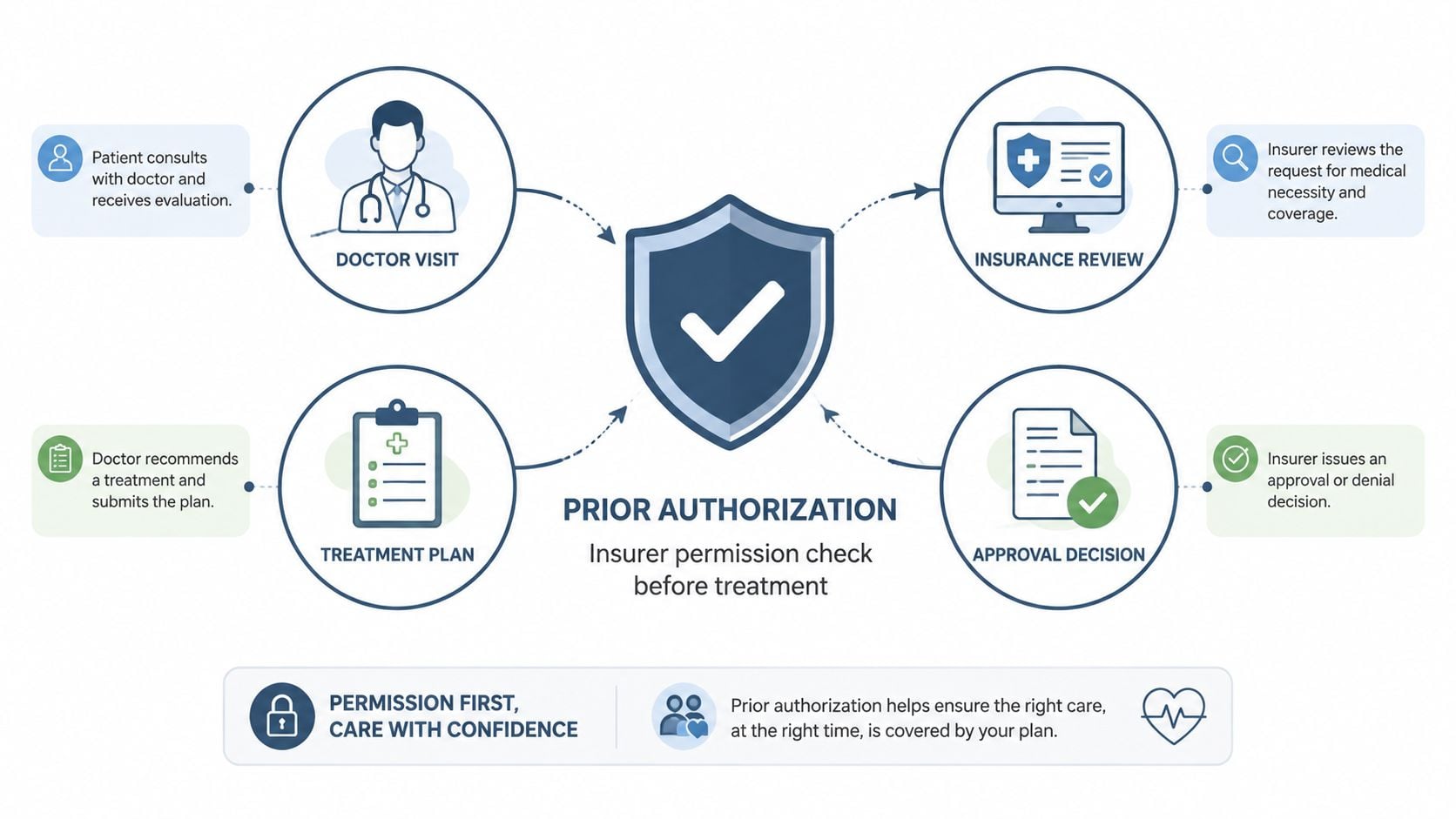
Patients shouldn't interpret a request for authorization as proof that care isn't medically necessary. It means the payer wants information that connects the recommended service to the plan's criteria. A complete request gives the reviewer a clearer basis for making that decision.
Why Behavioral Health Services Require Prior Authorization
Behavioral health often involves choosing the right intensity of care, not deciding whether treatment is needed. A person may need outpatient therapy, IOP, PHP, or inpatient care depending on symptoms, safety concerns, functioning, support at home, and response to previous treatment. Because the level of care affects the frequency and structure of services, insurers may ask for clinical evidence before approving coverage.
A request for PHP, for instance, may need to show why routine outpatient visits aren't enough at that moment. An IOP request may describe persistent symptoms, impaired functioning, medication concerns, or the need for regular group and individual treatment. The clinical team must connect the recommendation to the person's current presentation rather than relying on a diagnosis alone.
What the payer is trying to understand
The review commonly centers on medical necessity, meaning whether the requested service is appropriate for the patient's condition and needs. Relevant information may include:
- The current diagnosis and significant symptoms
- Safety or risk factors
- Functional impairment at home, school, or work
- Prior treatment and the patient's response
- Medication history and current concerns
- The reason the requested level of care is appropriate
- Goals for treatment and a plan for continued care
Conditions such as anxiety disorders, depression, bipolar disorder, OCD, and PTSD can vary widely in severity. Two people with the same diagnosis may need different services. A strong request explains the individual's situation and why the proposed treatment matches it.
This review isn't supposed to be a personal judgment. It is a criteria-driven coverage decision, and the quality of the clinical packet can affect how easily the reviewer understands the recommendation. Vague notes may create questions, while organized documentation can reduce unnecessary back-and-forth.
Treatment type can also affect review
Therapy, medication management, trauma-focused care, and structured programs may each have separate payer requirements. Patients exploring trauma treatment can review Cedar Hill's information about whether EMDR therapy is covered by insurance while also confirming the rules of the specific plan.
A recommendation for care should therefore include more than a service name. It should show the clinical need, the expected benefit, and the reason a less intensive option may not adequately address current symptoms. That information helps the insurer evaluate the request and helps the patient understand why a particular program was recommended.
How the Prior Authorization Process Works Step by Step
The prior authorization process becomes less intimidating when each handoff has a clear purpose. The exact forms and submission methods vary by plan, but the core path usually moves from clinical assessment to documentation, payer review, decision, and possible appeal.
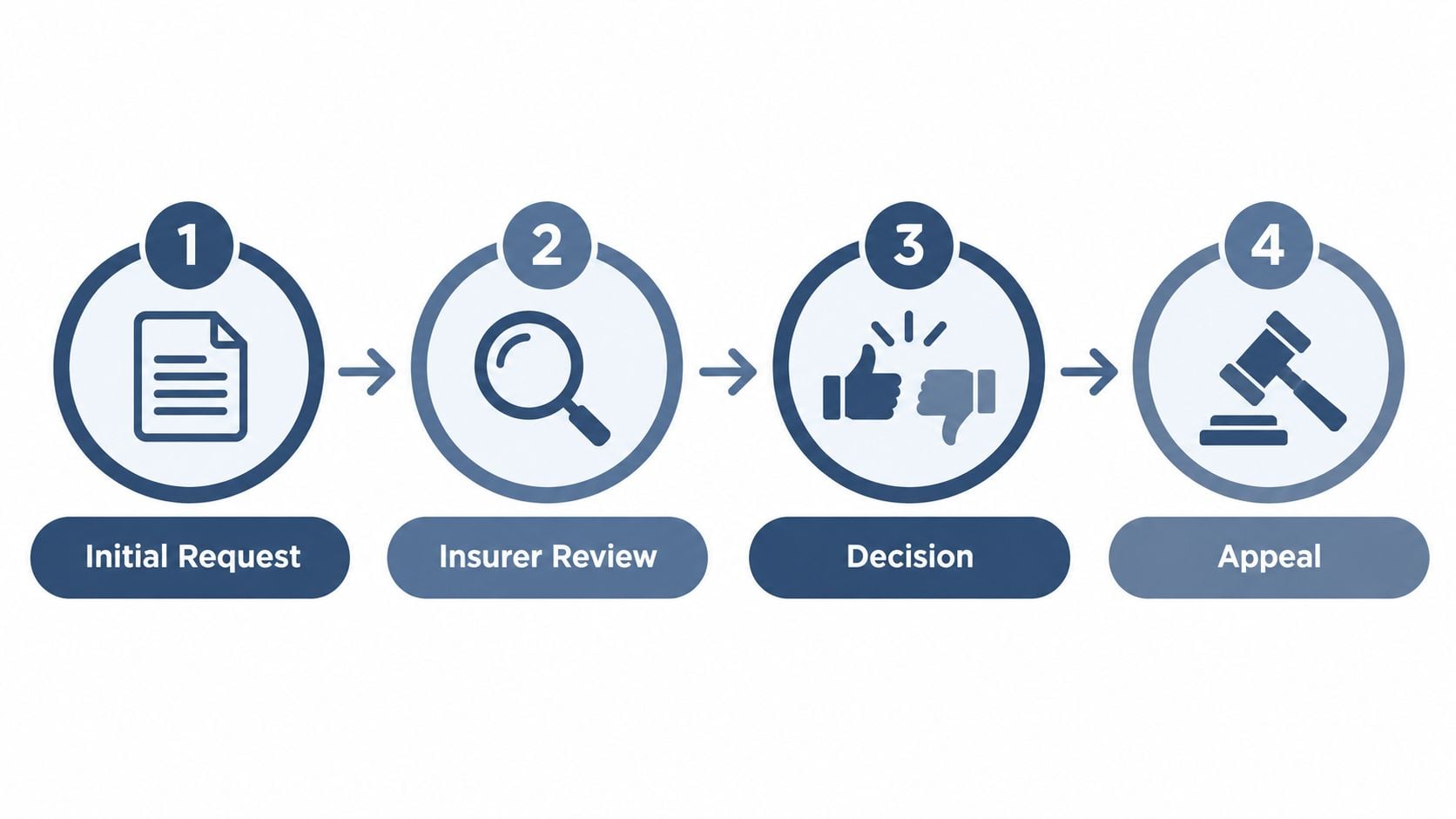
1. The patient receives a clinical recommendation
A clinician or treatment center evaluates the patient's symptoms, functioning, safety, and treatment history. The recommendation should identify the appropriate service, such as PHP, IOP, outpatient therapy, or medication management.
This is the point where the patient or family should ask what the program involves, how often care occurs, and whether the service is expected to require authorization. Early questions can prevent an avoidable pause after intake.
2. The treatment center verifies benefits and requirements
The admissions or billing team checks the insurance information and identifies whether the plan covers the service and requires prior authorization. Benefits verification isn't the same as approval. It is a way to uncover the payer's rules before the request is submitted.
The team may also confirm the required submission channel, clinical forms, authorization dates, and contact information. Patients should provide accurate member details and promptly sign any necessary release so the care team can communicate with the payer.
3. Clinical documentation is assembled
The request needs evidence that connects the patient's condition to the requested level of care. A useful packet may include diagnosis, current symptoms, risk factors, functional impact, prior treatment history, medication information, treatment goals, and a medical necessity rationale.
The most important question is simple: Why is this service needed now? A packet that answers that question clearly gives the reviewer a coherent picture of urgency and fit. Missing dates, unclear symptom descriptions, or inconsistent information can lead to requests for more material.
4. The request reaches the payer
The treatment center submits the request through the channel required by the insurance plan. That may involve an electronic workflow, a designated authorization department, or another approved method. The payer then assigns the request for review.
Patients should ask for a reference number or other confirmation that the request was received. Without that information, follow-up calls can become slower because staff must search for the submission before discussing its status.
5. The payer reviews and responds
The reviewer may approve the request, deny it, or ask for more information. A request for clarification isn't the same as a final denial, but it still needs a prompt response to protect the admission timeline.
CMS's finalized interoperability rule requires impacted payers to return decisions within 72 hours for expedited requests and within seven calendar days for standard requests, with the applicable requirements beginning on the rule's stated compliance timeline. The same rule calls for the response to indicate whether the request is approved, denied with a specific reason, or awaiting more information. Details appear in the CMS interoperability and prior authorization final rule presentation.
6. The care team responds to problems
If the insurer asks for additional records, the treatment center should identify exactly what is missing and send it through the required route. If the payer denies the request, the patient and care team can review the denial reason and determine whether a correction, peer-to-peer review, or appeal is appropriate.
Patients comparing healthcare authorization systems may also find the step-by-step Sanitas approval process useful as a general example of how documentation and payer communication can shape authorization work, even though plan rules differ.
Timelines Denials and What to Expect While You Wait
Shorter decision clocks should make the process more predictable, but they don't guarantee approval or eliminate every delay. The practical risk is that a request can move quickly through review while still generating questions if the clinical documentation doesn't clearly support the requested care.
CMS's final rule establishes decision benchmarks of 72 hours for expedited requests and seven calendar days for standard requests for impacted payers, with requirements phased according to the applicable compliance dates. The rule also requires a specific reason for a denied prior authorization decision, regardless of how the request was submitted, as described in the CMS fact sheet on interoperability and prior authorization. That explanation can help the care team decide whether to correct the packet or appeal.
Patients may still experience longer real-world waits. A 2025 patient survey found that 27% of patients waited two weeks to more than a month for a decision, and 13% said delays worsened their health (DrFirst patient survey report). The same source reported that 95% of physicians saw care delays from prior authorization in 2025, while 79% said patients abandoned treatment because of authorization barriers. Those findings explain why waiting isn't a neutral administrative inconvenience for someone whose symptoms are changing.
Denial rates vary by insurance market
KFF's analysis of 2025 insurer data found different average denial rates across major market segments (KFF prior authorization metrics).
| Market Segment | Standard Denial Rate | Expedited Denial Rate |
|---|---|---|
| Medicare Advantage | 12% | 10% |
| Medicaid managed care | 14% | 12% |
| ACA Marketplace plans | 18% | 16% |
An initial denial doesn't always end the matter. In Medicare Advantage, KFF found that insurers made nearly 53 million prior authorization determinations in 2024, and 4.1 million requests were fully or partially denied, equal to 7.7% of all requests. Only 11.5% of denied requests were appealed, yet 80.7% of appealed denials were overturned at least in part (KFF Medicare Advantage analysis). These figures don't predict an individual case, but they show why reviewing the denial reason and considering an appeal can matter.
While waiting, patients should stay connected with the treatment center, report worsening symptoms to a clinician, and use urgent or emergency support when safety is at risk. Authorization work should never replace immediate help during a crisis.
Practical Tips to Expedite Your Prior Authorization Approval
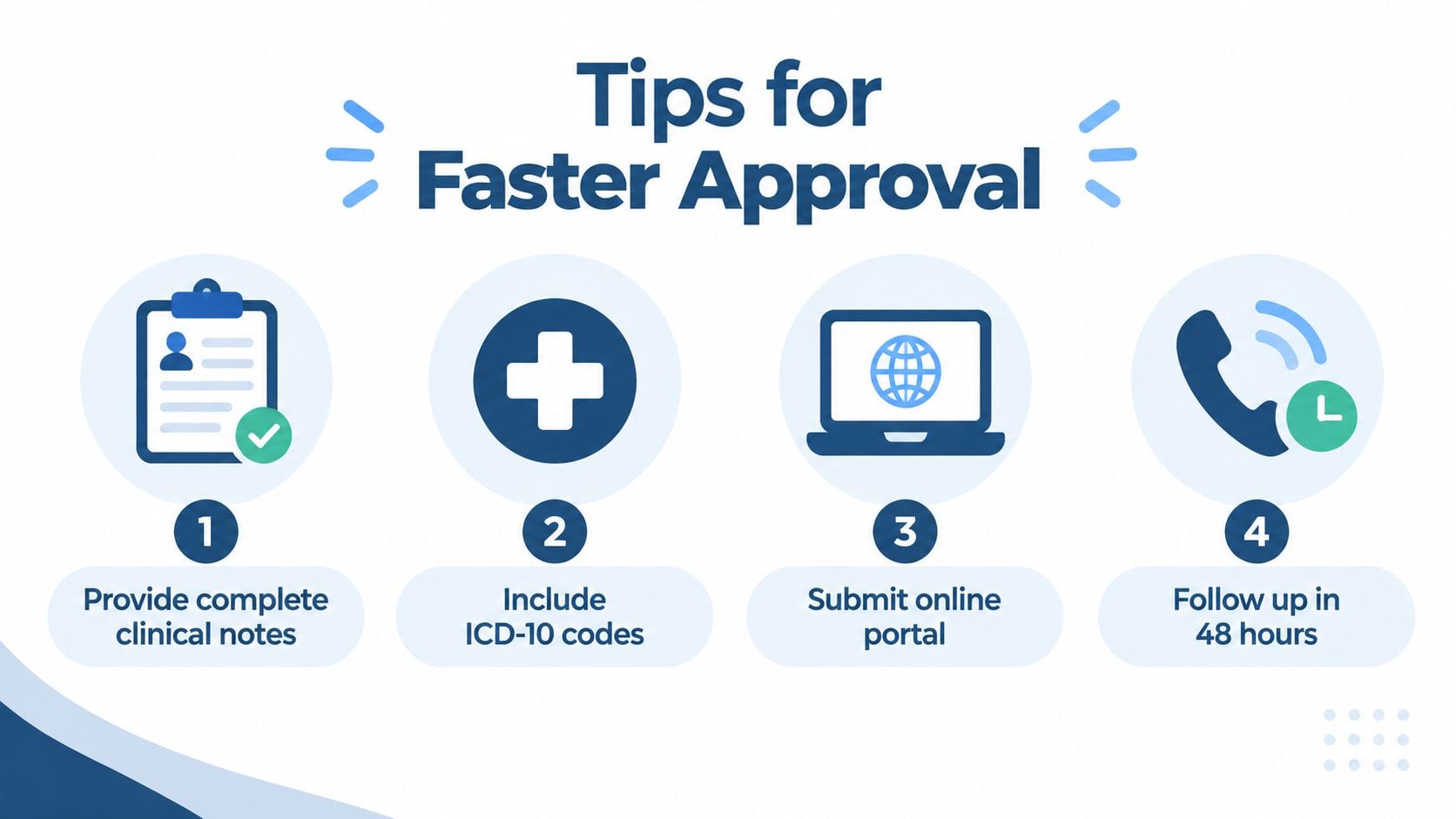
A patient can't control the insurer's final decision, but the patient and care team can reduce preventable administrative friction. The strongest approach combines early verification, a complete clinical packet, and active status tracking.
Prepare before submission
Patients and families can gather the insurance card, member information, contact details for current clinicians, medication lists, prior treatment records, and any relevant discharge or safety information. The treatment center can then determine which documents are needed rather than asking for them one at a time.
The clinical narrative should make the requested level of care easy to understand. It should connect symptoms and functional problems to the recommended service, explain prior treatment response, and identify risks that make timely care important.
- Confirm the requirement: Ask whether the specific PHP, IOP, therapy, or psychiatry service needs prior authorization.
- Use consistent information: Make sure names, dates, diagnosis details, and treatment history match across forms and records.
- Explain urgency clearly: If symptoms or safety concerns make expedited review clinically appropriate, the treating professional should document that rationale.
- Keep a record: Save the submission date, reference number, payer contact, requested materials, and every status update.
Follow up with the right people
The provider's admissions or authorization staff usually handle the clinical submission, while the payer's member services or authorization department can confirm receipt and status. Patients should ask who owns the next action before ending a call. If the payer requests more information, the care team needs to know quickly.
A treatment center with an organized intake process can reduce the number of separate calls a family must make. Cedar Hill Behavioral Health provides instant benefits verification, helps identify prior authorization requirements, and supports same-day admission planning while the insurance process is addressed. Patients can review the center's insurance verification process before contacting admissions.
Protect the admission window
Approval may take time even after a complete request is submitted. Patients should ask whether an assessment or admission can proceed while authorization is pending, what financial responsibility could apply, and how the center will communicate updates. Those questions clarify the plan instead of leaving the patient to guess.
If the payer issues a denial, the next action should be based on the stated reason. A corrected document may resolve a missing-information problem, while a clinical denial may call for additional medical necessity evidence or an appeal.
Next Steps with Cedar Hill Behavioral Health in Massachusetts
Prior authorization is manageable when the patient knows what the payer needs and has a care team coordinating the handoffs. The process starts with an assessment, moves through benefits verification and clinical documentation, and continues with payer follow-up until the request receives an answer. A denial can also create a path for review when the care team identifies information that needs correction or clarification.
Cedar Hill Behavioral Health is a veteran-owned treatment center in Southborough, Massachusetts, offering a continuum of PHP, IOP, and OP services. Licensed mental health and medical professionals create individualized plans using individual, group, and family therapy, evidence-based approaches such as cognitive behavioral therapy and mindfulness, and thoughtful medication management. Programs support adults experiencing anxiety, depression, bipolar disorder, borderline personality disorder, OCD, PTSD, and other mood disorders.
The admissions team accepts most major insurance plans, provides instant benefits verification, and offers payment plans for self-pay clients. Free tools, including a confidential online depression test and an adult ADHD self-screen, can help prospective clients decide whether to request a clinical conversation. Readers seeking Massachusetts-specific coverage information can also review MassHealth behavioral health access and support.
For adults and families who need timely support, Cedar Hill can help identify the appropriate level of care, clarify authorization requirements, and guide same-day admission steps. The goal is to keep insurance questions from becoming the reason a person waits alone while symptoms worsen.
Cedar Hill Behavioral Health offers PHP, IOP, and OP treatment in Southborough with instant benefits verification and guidance through prior authorization requirements. Visit Cedar Hill Behavioral Health or call (508) 310-4580 to discuss same-day admission and the next step toward care.