When struggling with OCD, understanding its different types can be crucial for effective management. So, what are the 4 types of OCD? There are four main types, each characterized by specific OCD obsessions: Checking, Contamination, Symmetry and Ordering, and Intrusive Thoughts. Each type comes with unique challenges and symptoms. This article will explore these four types in detail, providing insights into their characteristics and how they can be managed.
Key Takeaways
Obsessive-Compulsive Disorder (OCD) is a chronic mental health condition characterized by intrusive thoughts and compulsive behaviors, impacting daily functioning and emotional well-being.
OCD can manifest in four distinct types: Checking OCD, Contamination OCD, Symmetry and Ordering OCD, and Intrusive Thoughts OCD, each requiring specialized treatment approaches.
Effective treatment for OCD typically includes a combination of Cognitive Behavioral Therapy (CBT), medication such as SSRIs, and alternative therapies, aimed at improving quality of life and managing symptoms.
Understanding Obsessive-Compulsive Disorder (OCD)

Obsessive compulsive disorder (OCD) is a persistent mental health condition with a profound impact on those it affects. It manifests through recurring intrusive thoughts and mental images, and the performance of compulsive behaviors in an attempt to alleviate distress, creating a relentless loop of discomfort and ritualistic actions. The compulsions are provoked by ongoing, upsetting obsessions that compel individuals to perform these acts as a means of mitigating their anxiety.
The presence of OCD can make even the most routine activities exceedingly difficult, demanding excessive amounts of time, energy, and mental focus. This constant battle provokes intense emotional strain and psychological turmoil that can disrupt personal relationships, hinder job productivity, and complicate basic daily tasks.
It’s crucial to acknowledge both the psychological toll and emotional weight carried by those with OCD while also considering the biological aspects influencing its onset. Understanding these elements is essential for recognizing the intricacy behind this disorder as well as emphasizing why holistic treatment approaches are necessary for managing OCD effectively.
The Psychological and Emotional Impact of OCD
People who experience OCD often deal with strong, constant sensations of anxiety, fear, guilt, and shame. These feelings can cause considerable distress. For example, someone with a contamination fear may find it difficult to engage in social situations, which might lead them to withdraw from others. The psychological impact of OCD is substantial and can greatly interfere with everyday activities as well as job performance.
To emotional stressors, those living with OCD might encounter challenges in their academic or professional lives because they have difficulty meeting deadlines and staying focused. Hours spent performing compulsive behaviors leave individuals feeling exhausted and unable to concentrate properly.
Physical manifestations such as headaches, muscle tension, and tiredness are typical for people managing symptoms of OCD. These hinder one’s ability to function normally on a day-to-day basis. Seeking assistance along with adhering to an established treatment plan can drastically enhance the quality of life for those dealing with the symptoms of OCD.
Biological Factors Contributing to OCD
Numerous biological elements, including an imbalance in serotonin and genetics, are pivotal in the onset of OCD. Serotonin is a key neurotransmitter that influences various physiological functions such as mood regulation, emotional stability, memory retention, pain endurance, sleep patterns, appetite control and sexual drive. Deviations from normal serotonin levels may lead to the manifestation of OCD symptoms.
The likelihood of developing OCD escalates with instances of the condition within one’s family tree, which suggests genetic links. Recognizing these biological aspects is essential for guiding treatment choices. This includes employing selective serotonin reuptake inhibitors (SSRIs) alongside cognitive behavioral therapy (CBT), both strategies aimed at ameliorating the symptoms associated with OCD.
What Are the Four Types of OCD?
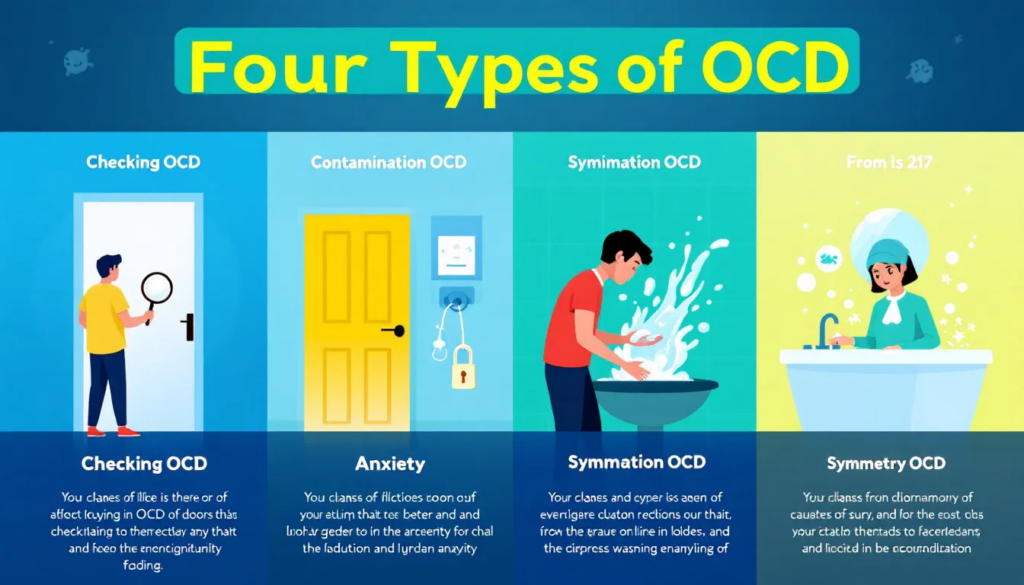
OCD can present itself in multiple ways that go beyond commonly perceived habits such as repetitive hand washing or incessant checking of light switches. This disorder is segmented into four distinct types, which include Checking OCD, Contamination OCD, Symmetry and Ordering OCD, and those obsessions pertaining to Intrusive Thoughts OCD.
The symptoms associated with each type of OCD are distinctive and thus necessitate individualized strategies for management. Recognizing the specific category one’s experiences fall under can facilitate seeking suitable treatment options tailored to their needs.
Checking OCD: Overcoming Doubts and Fears
Individuals with checking OCD are plagued by an incessant fear of harm or errors, which compels them to engage in repetitive rituals of confirmation. These may include the need to constantly reassess whether doors are secured, scrutinize appliances for safety hazards, or inspect their own bodies for signs of well-being. Their actions stem from a profound sense of uncertainty and heightened anxiety levels that necessitate multiple validations to confirm that objects like doors remain locked securely—processes that can be both time-intensive and psychologically exhausting, often causing distress and creating strain in personal relationships.
The psychological burden imposed by checking OCD is considerable. It often leads individuals down a path marred with embarrassment and tendencies toward seclusion. Dominated by an unyielding quest for assurance against potential mishaps, those affected find their mental space crowded out by these preoccupations leaving little room for other life pursuits.
To address the persistent fears associated with this form of OCD requires engaging in a holistic treatment regimen inclusive primarily of cognitive behavioral therapy (CBT), augmented potentially with pharmacological intervention where necessary.
Contamination OCD: Managing Fear of Germs and Dirt
Contamination OCD is marked by an intense fear of contamination from germs, dirt, or other impurities, which can result in substantial anxiety and concern about maintaining cleanliness. Sufferers may be haunted by the fear of contracting illnesses, feeling physically tainted, or being affected by mental pollution. In their efforts to counteract these fears, individuals with this condition might adopt compulsive cleaning practices that could include excessive handwashing and steering clear of items they consider contaminated. The motivation behind these actions is a profound need to secure a sense of safety and purity.
Those dealing with Contamination OCD may find themselves habitually sanitizing their environment, discarding possessions thought to be polluted, and often changing clothing as measures against germ exposure.
Emotional contamination—where one fears becoming mentally corrupted through exposure to unethical or unclean influences—is another significant aspect within this subtype of OCD. Addressing such anxieties demands comprehensive treatment strategies that encompass therapy sessions and potentially the use of medication.
Symmetry and Ordering OCD: Seeking Perfection
Individuals with Symmetry and Ordering OCD are consumed by a need for precision, driven by perfectionistic tendencies. They endure significant distress when unable to attain perfect symmetry or orderliness. To alleviate their anxiety, they become deeply engrossed in scrupulous organizing activities. Typical actions include meticulously aligning objects and sorting them according to characteristics like size, color, or shape while performing mental rituals aimed at achieving equilibrium.
The quest for absolute perfection inherent in individuals with Symmetry and Ordering OCD can result in an overindulgence in creating timetables, devising plans, and carrying out organizational ceremonies. Such persons often engage in compulsive behaviors that involve rearranging things continuously as well as counting items repeatedly or reciting particular phrases.
These obsessive acts serve as strategies to mitigate the profound unease linked with perceived body dysmorphic disorder symptoms. Cognitive behavioral therapy (CBT) is frequently employed as treatment. It concentrates on confronting the compulsion towards flawlessness and cultivating alternative coping mechanisms that are more adaptive and healthful.
Intrusive Thoughts OCD: Battling Unwanted Thoughts
OCD with intrusive thoughts is characterized by persistent and distressing thoughts that result in considerable distress. These distressing thoughts typically focus on controversial subjects such as sex, aggression, or sacrilege, causing individuals to worry about the potential harm of their own thoughts. To soothe this discomfort, those suffering from Intrusive Thoughts OCD might resort to mental rituals like repetitively seeking validation, reciting certain words internally or executing cognitive strategies to mitigate anxiety triggered by an obsessive thought.
The subject matter of these invasive musings can be extremely disconcerting and may incite significant feelings of guilt and disgrace. Afflicted individuals often feel alone and burdened with the apprehension that they could succumb to their intrusive thought or that it reflects actual desires. Thus are tormented by persistent and troubling reflections.
Employing mindfulness-infused CBT has shown promising outcomes for managing such conditions effectively. It equips people with skills necessary for understanding that dreaded repercussions are improbable. This technique assists them in cultivating a more adaptive interaction with their inner experiences while diminishing reliance on coping through mental acts.
Physical and Emotional Symptoms of OCD

Symptoms of OCD have a profound effect on individuals, both physically and emotionally. The physical symptoms include continuous muscle tension, relentless headaches, and extreme tiredness stemming from the effort to control obsessive thoughts and compulsive behaviors. Excessive hand-washing may cause contact dermatitis, while additional compulsions can lead to bodily harm.
On an emotional level, those with OCD often experience guilt, shame, frustration, and severe anxiety that disrupts their ability to sustain normal routines in daily life.
Physical Symptoms of OCD
OCD may present several physical manifestations, such as:
Headaches due to tension
Persistent muscle soreness
Constant tiredness
Interruptions in sleep patterns
Digestive system issues
Skin conditions
These physical symptoms are frequently a consequence of the stress and anxiety that come with dealing with compulsive behaviors and obsessive thoughts. For instance, skin irritation like contact dermatitis can occur from too much handwashing, whereas muscular ache and persistent headaches might stem from the exertion associated with repetitive actions.
The exhaustive nature of OCD rituals can also impinge on one’s energy reserves and overall well-being. People might devote numerous hours daily to these rituals, which leaves them exhausted and diverts their attention away from other life areas. Such continuous exhaustion can amplify existing physical symptoms, thus perpetuating a relentless cycle of strain and unease.
Emotional Symptoms of OCD
OCD is associated with overwhelming emotional experiences that include:
anxiety
dread
remorse
embarrassment
The intense emotions are closely linked to the disorder’s hallmark obsessive thoughts and compulsive behaviors. Intrusive thoughts, for example, can provoke severe feelings of guilt and shame because sufferers might believe these unwanted thoughts represent their genuine desires or fear acting upon them. The relentless strain often leads to continuous frustration and agitation, complicating social engagements and relationships.
Those grappling with OCD might find themselves retreating from others, opting for solitude due to a fear of being judged or because their compulsive rituals disrupt typical social interactions. Such withdrawal can intensify existing anxieties and depressive symptoms, fueling a vicious cycle of mental anguish that poses challenges without professional intervention.
Effective Treatments for OCD

Cedar Hill Behavioral Health Massachusetts delivers an integrated treatment regimen for OCD that typically incorporates therapy, medication, and supplementary alternative therapies. Their dedicated attention is centered on controlling intrusive thoughts and compulsive behaviors with a customized care plan. By utilizing a variety of therapeutic methods including medications and holistic practices designed to meet the unique requirements of each patient, Cedar Hill aims to mitigate the effects of OCD while boosting patients’ life quality.
The facility employs individualized therapy sessions leveraging proven techniques such as Cognitive-Behavioral Therapy (CBT), which assists individuals in altering detrimental thought cycles. Group therapy provides a platform for communal support where patients can exchange personal stories and acquire effective coping mechanisms within a nurturing setting.
Family therapy is provided to inform relatives about the nuances of OCD and help create an encouraging atmosphere at home. The implementation of this thorough strategy promotes sustained management of symptoms and enhances overall well-being for those affected by OCD.
Cognitive Behavioral Therapy (CBT)
Cognitive Behavioral Therapy (CBT) is a widely employed method for treating OCD, celebrated for its considerable effectiveness. This treatment modality guides individuals through the process of recognizing and challenging detrimental thought patterns while simultaneously fostering healthier coping strategies. Exposure and Response Prevention (ERP), which is a particular type of CBT specifically designed for addressing OCD, incrementally exposes individuals to their fears without allowing them to perform compulsive behaviors. ERP stands as the most esteemed form of intervention for OCD due to its proven ability to substantially alleviate symptoms.
By disrupting the habitual cycle connecting anxiety with compulsive actions, ERP enables people to understand that their anticipated negative outcomes are unlikely. Despite being demanding, this technique can lead participants toward meaningful improvement in symptom management when performed under professional supervision.
To provide an even more effective approach towards overcoming OCD symptoms, CBT and ERP are frequently integrated into broader personalized therapy plans that incorporate additional therapeutic techniques tailored to meet each individual’s unique requirements.
Medication Options
At the onset of OCD treatment, medications are typically recommended to adjust serotonin levels and mitigate anxiety as well as obsessive thoughts. Selective Serotonin Reuptake Inhibitors (SSRIs), which work by stabilizing the neurotransmitter serotonin that influences mood regulation and obsessive behaviors, are often used for this purpose.
While SSRIs prove substantially beneficial for a majority of patients, some subtypes of OCD may exhibit less responsiveness to these drugs. This variance underscores the need for an individualized strategy in managing OCD treatment.
Alternative Therapies
Complementary therapies can significantly bolster the primary treatment regimen for OCD when paired with customary therapy and medications. Practices like relaxation exercises, mindfulness, and participation in support groups add depth to traditional methods by affording supplementary coping strategies and layers of support. These alternative methods play a crucial role in fostering healthier coping mechanisms, diminishing anxiety levels, and elevating an individual’s general health.
Specifically noteworthy are support groups which provide individuals with a community that offers empathy and insight into their experiences. This sense of belonging is often essential for those who may otherwise feel isolated due to their condition.
Cedar Hill Behavioral Health Massachusetts: Leading OCD Treatment

Cedar Hill Behavioral Health Massachusetts is recognized as a top-tier institution for addressing obsessive-compulsive disorder, offering tailored and thorough treatment programs that integrate cutting-edge cognitive-behavioral therapy with medication options. The center’s partial hospitalization service caters to individuals suffering from severe OCD symptoms, delivering concentrated support alongside intensive behavioral therapy sessions. This strategy guarantees patients obtain the necessary assistance to effectively control their symptoms and enhance their overall well-being.
At Cedar Hill, the combined efforts of individualized counseling, group sessions, and family involvement are all dedicated to tackling the multifaceted nature of OCD. By nurturing an accommodating atmosphere coupled with scientifically-backed techniques, Cedar Hill facilitates enduring self-regulation for those dealing with this condition.
With a focus on customized care and comprehensive treatment methodologies, Cedar Hill stands out as an exemplary choice for individuals seeking effective solutions for obsessive-compulsive disorder management.
Summary
In conclusion, obsessive-compulsive disorder (OCD) is a complex and challenging mental health condition that affects millions of people worldwide. Understanding the different types of OCD—Checking OCD, Contamination OCD, Symmetry and Ordering OCD, and Intrusive Thoughts OCD—helps in recognizing the diverse ways this disorder can manifest and impact individuals’ lives. The physical and emotional symptoms of OCD can be debilitating, but effective treatment options are available.
Through a combination of cognitive-behavioral therapy (CBT), medication, and alternative therapies, individuals with OCD can manage their symptoms and improve their quality of life. Cedar Hill Behavioral Health Massachusetts offers a comprehensive and personalized approach to OCD treatment, making it an excellent choice for those seeking help. By addressing the psychological, emotional, and biological aspects of OCD, Cedar Hill ensures that patients receive the best possible care and support.
Frequently Asked Questions
What are the main types of OCD?
The main types of OCD include Checking OCD, Contamination OCD, Symmetry and Ordering OCD, and Intrusive Thoughts OCD.
Each type presents unique challenges that can significantly impact daily life.
What are common symptoms of OCD?
Common symptoms of OCD include persistent intrusive thoughts, repetitive behaviors, and significant anxiety that can disrupt daily functioning and lead to emotional distress.
It is important to seek help if these symptoms affect your quality of life.
How is OCD treated?
OCD is effectively treated through a combination of cognitive-behavioral therapy (CBT), medications such as SSRIs, and alternative therapies like relaxation techniques and support groups.
This multi-faceted approach helps individuals manage their symptoms more effectively.
What role does genetics play in OCD?
Genetics significantly contribute to the risk of developing OCD, particularly for individuals with a family history of the disorder. This hereditary factor highlights the importance of understanding familial patterns in OCD cases.
Why is Cedar Hill Behavioral Health Massachusetts considered the best option for OCD treatment?
Cedar Hill Behavioral Health Massachusetts is considered the best option for OCD treatment due to its comprehensive and personalized approach, incorporating advanced cognitive-behavioral therapy, pharmacological options, and holistic interventions aimed at ensuring long-term management and enhancing patients’ quality of life.