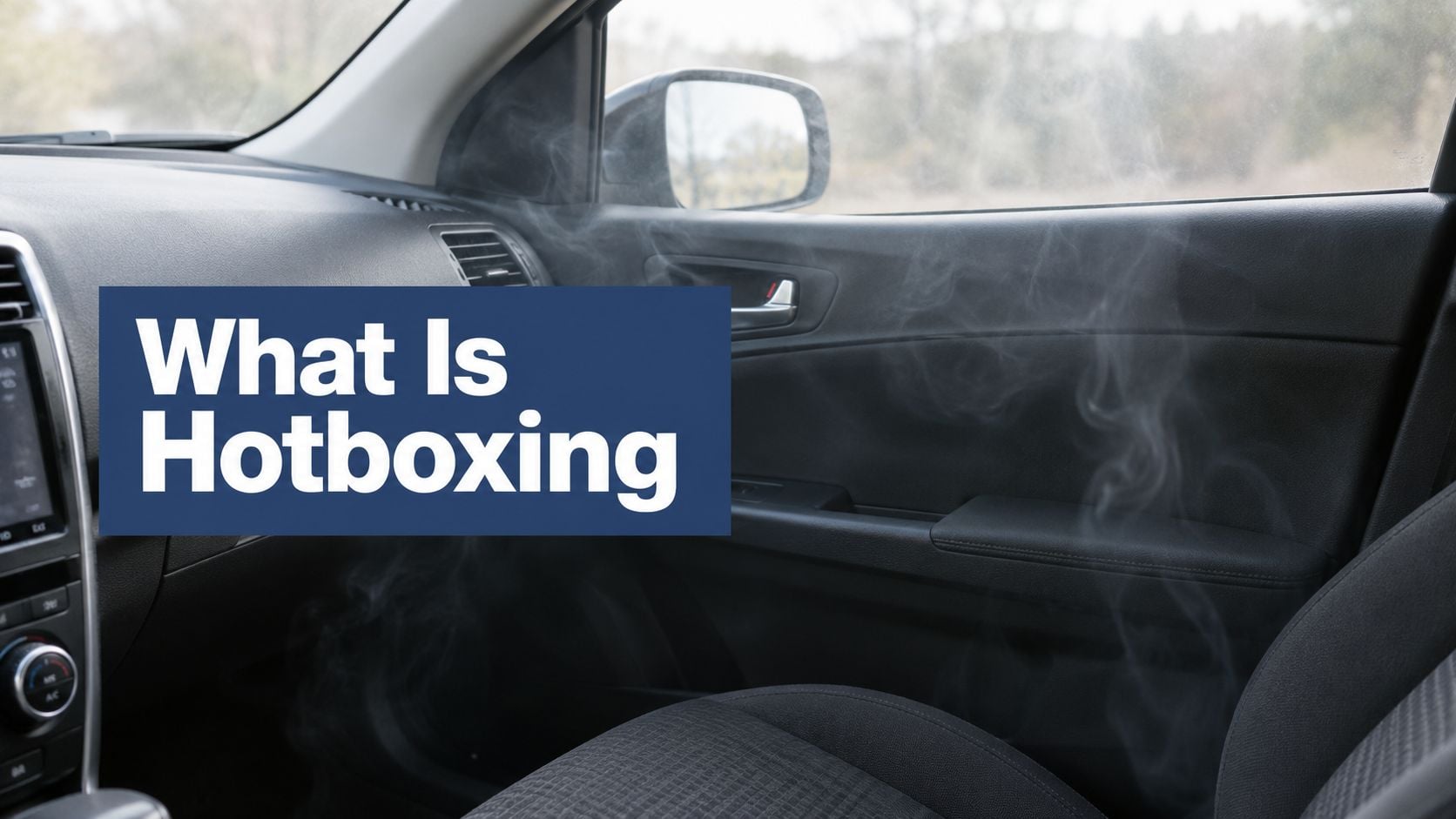
Hotboxing is smoking cannabis in a small, enclosed, poorly ventilated space so smoke accumulates and everyone inside breathes it repeatedly. In a 2015 Johns Hopkins study, nonsmokers in an unventilated chamber showed detectable THC and mild impairment after extreme secondhand exposure.
A parked car with the windows closed can become that chamber quickly. Three friends may be talking, passing a joint, and exhaling into the same air. Someone who isn't smoking may still breathe smoke containing cannabinoids, fine particles, and combustion irritants. The experience can feel social, but the exposure is physical and measurable.
For adults in Massachusetts, understanding what is hotboxing means looking past slang. The central issue is indoor air quality, secondhand smoke, and whether repeated cannabis use has started affecting health, relationships, work, or emotional stability.
Table of Contents
- A Quick Picture of What Hotboxing Actually Looks Like
- The Core Definition Beyond the Slang
- What Happens to the Air During Hotboxing
- Health Effects You Can Feel This Week and Next Year
- Legal and Social Misconceptions Worth Clearing Up
- When Hotboxing Signals Something Bigger Going On
- Practical Harm-Reduction Steps If Someone Is Going to Do It Anyway
- Finding Real Help in Massachusetts When Use Stops Feeling Optional
A Quick Picture of What Hotboxing Actually Looks Like
A group sits in a parked car with the windows up. Smoke hangs between the seats instead of dispersing outdoors, and each exhalation adds more material to the shared air. A nonsmoker in that vehicle may feel lightheaded, notice irritated eyes, or experience what people casually call a “contact high.”
Hotboxing is the deliberate use of a small, enclosed, minimally ventilated space, such as a car, bathroom, closet, shed, or tent, to allow cannabis smoke to accumulate. The Johns Hopkins controlled study placed 6 nonsmokers and 6 smokers in a small chamber for 1 hour, with the smokers consuming 10 joints in the unventilated condition. The nonsmokers had detectable cannabinoids in blood and urine, mild subjective intoxication, small heart-rate increases, and minor impairment on psychomotor and working-memory tasks. Those effects weren't seen under ventilated conditions, as summarized in this overview of the Johns Hopkins hotboxing study.

The same pattern can occur in a dorm room, a small bathroom, a shed, a converted basement, or a tent. The setting doesn't need to look dramatic. A room with a closed door and little fresh airflow can trap smoke long enough to increase exposure for everyone present.
Practical rule: If smoke is intentionally being held in a shared enclosed space, bystanders are participating in the exposure whether or not they take a hit.
This framing isn't meant to shame cannabis use. It gives adults a more accurate way to judge risk. The question isn't only whether someone uses cannabis. It's also whether other people are breathing concentrated smoke, whether anyone needs to drive afterward, and whether the space includes children, pregnant people, or someone with a respiratory or heart condition.
The Core Definition Beyond the Slang
The word “hotboxing” often circulates casually among young adults and social groups. In everyday speech, it can mean anything from smoking in a closed car to filling a bathroom with smoke. A useful clinical definition needs to be more precise, because the amount of airflow changes what everyone inhales.
Hotboxing means smoking in a small, enclosed, minimally ventilated space so exhaled smoke accumulates and people inside repeatedly inhale shared secondhand smoke.
Two ingredients define the practice. First, the space is sealed or nearly sealed. That may mean closed car windows, a shut bathroom door, or a tent with limited air exchange. Second, combustible smoke is concentrated in that space, usually from cannabis, although tobacco or hookah smoke can create a similar indoor-air problem. A general description of hotboxing as smoking in places such as cars, closets, or bathrooms appears in this plain-language explanation of the practice.
Smoking indoors isn't always hotboxing. Someone standing near an open window with a fan moving air outdoors is creating a different exposure pattern from someone deliberately closing the windows and keeping the smoke inside. The distinction doesn't make indoor smoking harmless, but it does explain why ventilation affects dose.
A cracked window may reduce the concentration of smoke, but it doesn't instantly clear the room or guarantee that bystanders avoid exposure. Airflow depends on the size of the opening, the room, wind, fans, the number of people smoking, and how long the smoke remains trapped.
That air-chemistry difference matters more than the slang. When smoke accumulates, people share not only the odor but also cannabinoids, fine particles, carbon monoxide, and other combustion products. The resulting symptoms can reflect both THC exposure and irritation from polluted air.
What Happens to the Air During Hotboxing
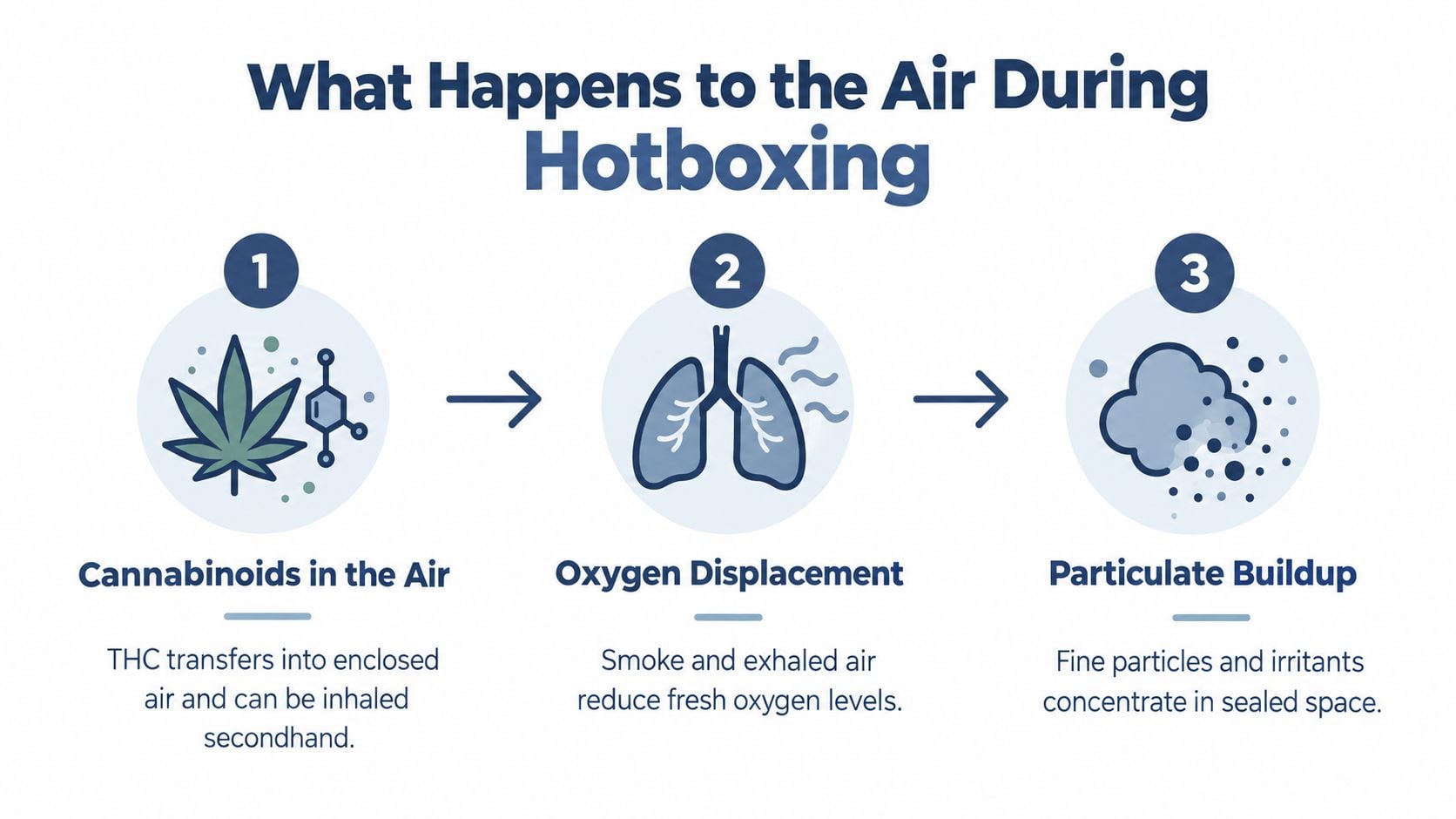
Hotboxing changes the air through several overlapping processes. The most important variable is ventilation, because fresh airflow dilutes and removes pollutants while a sealed space allows them to build up.
Cannabinoids enter the shared air
When cannabis burns, smoke carries THC and other cannabinoids into the surrounding air. A person who isn't smoking can inhale those compounds through the lungs, which explains why controlled human exposure studies have found detectable THC in blood and urine, small heart-rate increases, and mild-to-moderate subjective effects after about an hour in an unventilated room. The findings are described in this controlled-exposure report on secondhand cannabis smoke.
The Johns Hopkins findings are especially important because they showed that extreme, unventilated secondhand exposure can produce biological uptake and observable impairment in nonsmokers. That doesn't mean every person sitting near a cannabis smoker will become intoxicated. Room size, smoke production, ventilation, duration, and individual sensitivity all affect exposure.
Particles irritate the lungs
Combustion also releases fine particulate matter. These tiny particles can reach deep into the respiratory tract and irritate the eyes, nose, throat, and lungs. Enclosed spaces allow particles to remain suspended instead of dispersing outdoors, so a person may continue inhaling them between smoking episodes.
Secondhand marijuana smoke in enclosed environments can create high air-pollution concentrations and contribute to respiratory, cardiovascular, and cancer-related concerns, as discussed in this overview of hotboxing and indoor smoke exposure.
Carbon monoxide and irritants add to the experience
Smoke can also introduce carbon monoxide and volatile combustion chemicals. In a poorly ventilated space, these substances aren't refreshed away as quickly as they would be outdoors. Headache, eye irritation, fogginess, or a “hot” feeling may therefore reflect a combination of THC exposure, smoke irritation, and stale, polluted air.
This is similar to the broader principle behind airborne virus transmission explained, where enclosed spaces and limited air exchange allow suspended material to remain in the shared environment. The substances differ, but airflow still determines how quickly airborne material is diluted.
Health Effects You Can Feel This Week and Next Year
A person can notice effects within minutes or hours, while repeated exposure creates a different health question. The user actively smoking receives the direct dose from inhalation, but a bystander may still breathe enough concentrated smoke to experience irritation or mild psychoactive effects in an extreme, unventilated setting.
Immediate reactions
Nonsmokers may develop red or irritated eyes, throat discomfort, headache, lightheadedness, dizziness, or a mild contact-high sensation. Someone with asthma or another sensitive airway may notice coughing, chest tightness, or breathing discomfort sooner than others.
The person actively hotboxing may also experience dry mouth, increased heart rate, slowed reactions, short-term memory problems, anxiety, or paranoia. A small, smoke-heavy room can intensify discomfort because the person has fewer opportunities to pause, get fresh air, or regain a clear sense of surroundings.
Repeated exposure deserves attention
For regular cannabis smokers, repeated smoke exposure can contribute to ongoing respiratory irritation and bronchitis-like symptoms. People sharing the room may also experience recurring respiratory complaints and cardiovascular concerns associated with secondhand smoke exposure. The risk depends on factors such as frequency, room size, the amount of smoke, and ventilation.
Pregnant people, infants, children, people with asthma or chronic obstructive pulmonary disease, and anyone with a heart condition deserve particular protection from smoke-filled spaces. A caregiver who doesn't use cannabis still has a reasonable basis for asking others not to smoke inside a home or vehicle.
| Timeframe | Effects on the User Hotboxing | Effects on the Bystander |
|---|---|---|
| Short term | Increased heart rate, dry mouth, slower reactions, impaired short-term memory, anxiety, or paranoia | Eye and throat irritation, headache, dizziness, lightheadedness, and possible mild THC effects in extreme unventilated exposure |
| Longer term | Repeated respiratory irritation, bronchitis symptoms, and added cardiovascular strain | Recurrent smoke exposure, respiratory complaints, and concern about ongoing indoor air pollution |
A mental health symptom can complicate the picture. Anxiety, panic, or unusual perceptions after heavy cannabis exposure shouldn't automatically be dismissed as harmless intoxication. Persistent or severe symptoms warrant medical assessment, especially if they continue after the smoke exposure ends. Readers seeking background on symptom duration can review this resource on how long psychosis can last and what affects recovery.
Legal and Social Misconceptions Worth Clearing Up
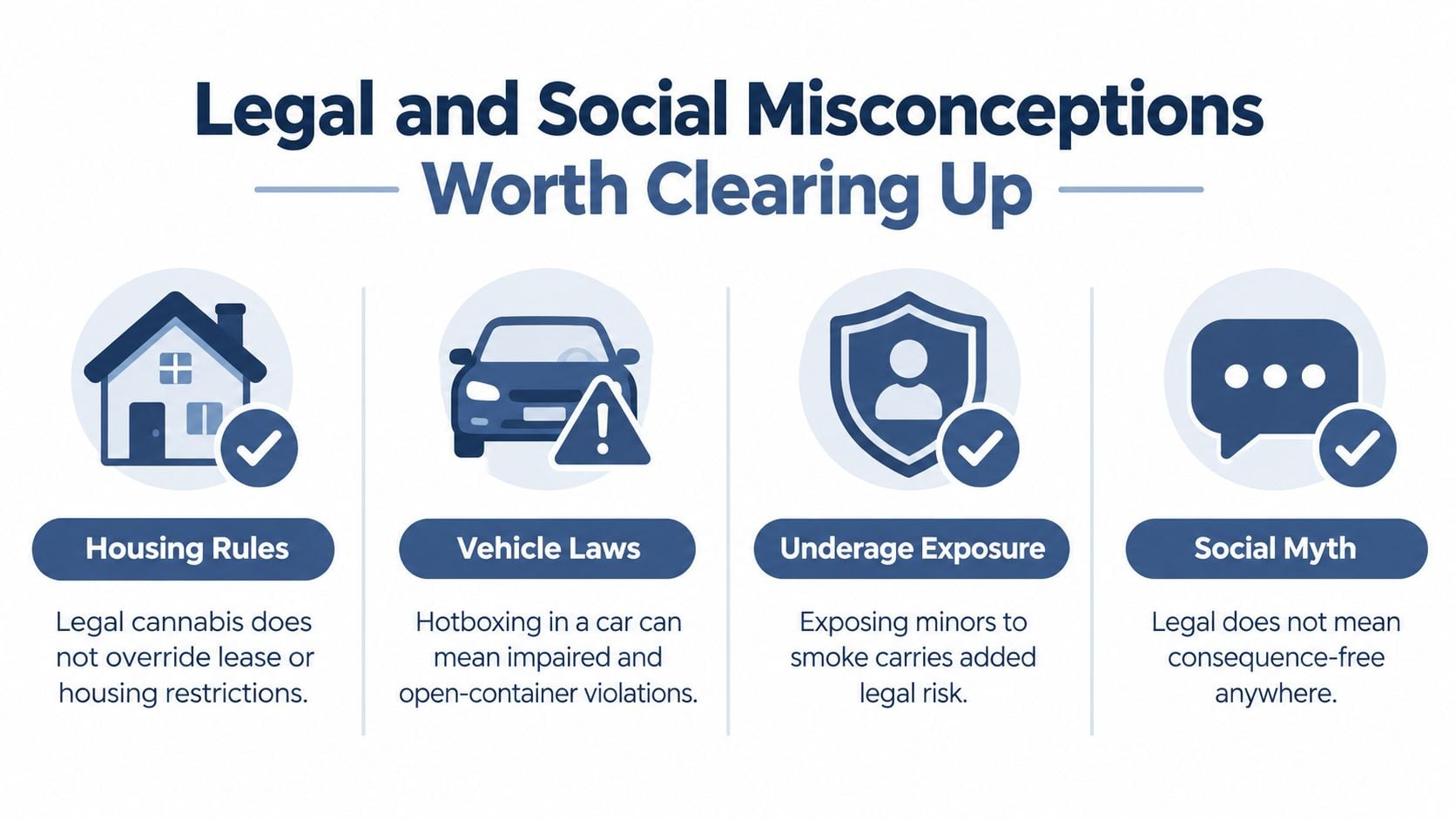
Legal cannabis doesn't make every place a legal or appropriate place to smoke. Massachusetts legalized adult possession and retail sales in 2017, but smoking can still be prohibited in most indoor public spaces, workplaces, and rental units with smoke-free policies.
A private bedroom isn't automatically exempt from housing rules. Landlords, property managers, colleges, and residence halls can enforce smoke-free clauses that apply to cannabis as well as tobacco. A tenant may have personal-use rights while still violating a lease by smoking inside the unit.
A vehicle isn't a risk-free private room
Massachusetts motor-vehicle law bars tobacco and cannabis smoking in a vehicle when a minor under 18 is present. Separate concerns also arise if an impaired person drives afterward, or if cannabis is handled in ways that violate open-container rules. A parked car can be private in one sense, but privacy doesn't remove safety or legal responsibilities.
“It's just weed” misses the bystander
Bystanders can inhale cannabinoids and smoke pollutants. In the extreme unventilated conditions described earlier, nonsmokers had detectable THC and mild impairment. That makes the social assumption that bystanders receive “nothing” inaccurate.
Employers in safety-sensitive roles may also respond to a positive THC-metabolite result according to workplace policy, testing requirements, and job responsibilities. Families should take repeated indoor smoke exposure around minors seriously, without turning every conversation into punishment or accusation. Adults deserve clear information about where personal choice ends and another person's exposure begins.
When Hotboxing Signals Something Bigger Going On
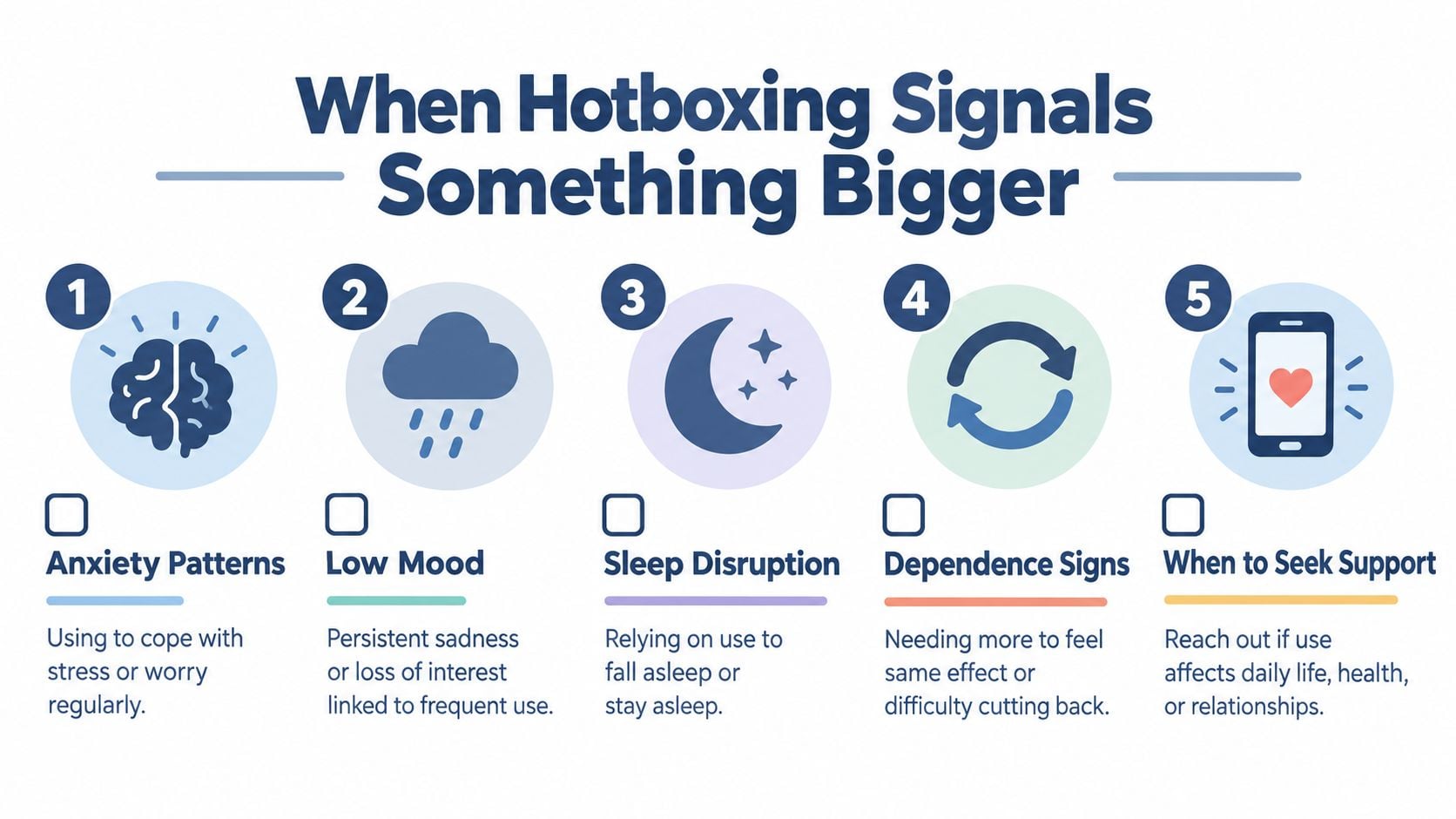
Many adults use cannabis without developing a substance-use disorder. Clinicians become more concerned when a social routine becomes scheduled, difficult to control, or necessary for emotional functioning.
A person may begin by joining friends in a car or room. Over time, the person might start arranging the day around the session, needing more cannabis to get the same effect, or feeling irritable, restless, low, or unable to sleep when trying to stop.
Warning signs deserve a calm response
Several patterns suggest that use may be moving beyond occasional recreation:
- Anxiety coping: Cannabis becomes the preferred way to blunt stress or worry instead of one occasional activity among many.
- Sleep reliance: The person feels unable to fall asleep without using or repeatedly wakes and uses again.
- Reduced functioning: Memory, motivation, attendance, performance, or follow-through begins slipping at work, school, or home.
- Social narrowing: Non-using friends and ordinary activities gradually disappear from the person's routine.
- Loss of control: Attempts to cut back fail, or the person continues despite respiratory symptoms, anxiety, relationship conflict, or other consequences.
Frequent high-THC use can be associated with anxiety symptoms, depressive episodes, and cannabis use disorder, particularly among young adults. Those possibilities require individual assessment rather than a diagnosis based on one episode. A clinician will ask about frequency, potency, mood, sleep, trauma, medications, functioning, and what happens during attempts to stop.
Professional support is appropriate after failed efforts to cut back, continued use despite health or relationship consequences, cannabis use during pregnancy, or use alongside prescribed psychiatric medication. More detail on recognizing when symptoms require structured support is available in this guide to signs that a higher level of care may be needed.
Practical Harm-Reduction Steps If Someone Is Going to Do It Anyway
Harm reduction doesn't endorse hotboxing. It recognizes that clear, practical advice can reduce exposure when a person isn't ready to stop.
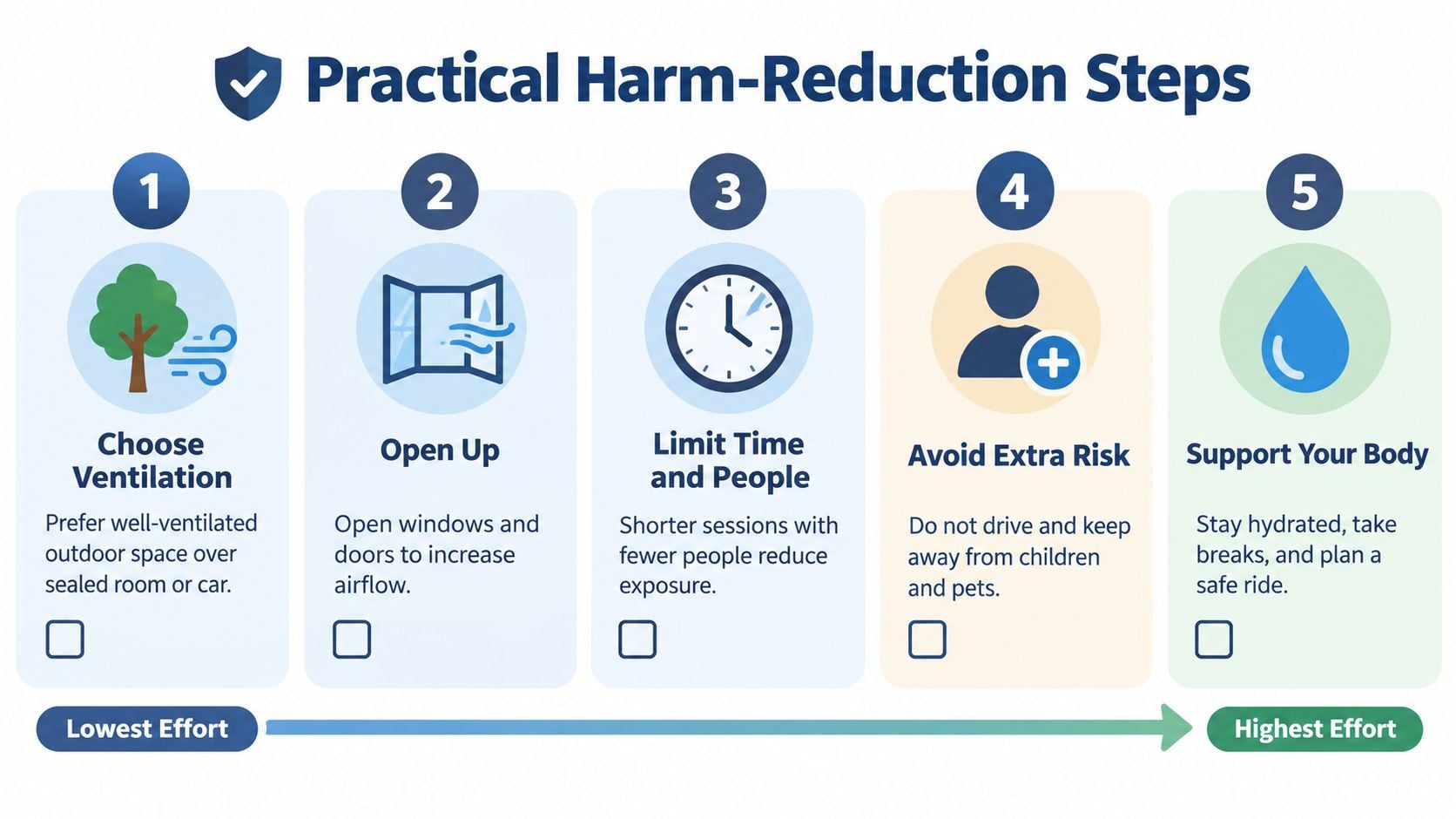
Choose outdoor airflow first. A open, well-ventilated outdoor setting is preferable to a sealed car, bathroom, closet, tent, or small room. Moving smoke away from shared breathing space addresses the central exposure problem.
Open the space up. Windows, doors, and fans can increase air exchange. Airflow reduces smoke concentration, but it doesn't instantly remove every particle or cannabinoid, so people shouldn't treat a cracked window as a guarantee of safety.
Keep the session shorter and less crowded. Fewer people producing smoke means fewer pollutants entering the shared air. Fresh-air breaks give the lungs and senses time away from the exposure, particularly if anyone develops a headache, dizziness, coughing, chest tightness, or anxiety.
Protect people who aren't choosing the exposure. Children, pregnant people, pets, and anyone with asthma, chronic obstructive pulmonary disease, or heart disease shouldn't be in the smoking area. A person who has used cannabis shouldn't drive or operate machinery, because impairment can outlast the social session.
Plan before use begins. Lower-potency cannabis may reduce the amount of THC circulating in the smoke, but it doesn't make combustion smoke harmless. Hydration, food, a safe ride, and a plan to stop if symptoms appear are more reliable safeguards than trying to judge impairment by how “high” someone feels.
Parents should keep cannabis products in child-resistant storage, separate from ordinary snacks and medications. If a child may have inhaled smoke or accidentally consumed a product, caregivers should seek urgent medical guidance rather than waiting for symptoms to resolve.
Ventilation reduces secondhand exposure, but it doesn't eliminate it. If someone repeatedly chooses enclosed smoke, uses cannabis to manage distress, or can't stop despite consequences, the more useful question may no longer be how to make hotboxing safer. It may be whether treatment can help the person regain choice.
Finding Real Help in Massachusetts When Use Stops Feeling Optional
Cannabis or hotboxing use may have crossed from social to compulsive when a person repeatedly fails to quit, hides use, relies on it to manage mood, or continues despite coughing, anxiety, sleep disruption, conflict, or problems at work. The pattern matters more than the label. A clinician can assess whether cannabis, depression, anxiety, trauma, bipolar symptoms, or another condition is driving the cycle.
Treatment intensity should match the person's needs. Partial Hospitalization Programs, or PHP, provide structured daytime care while the person returns home when appropriate. Intensive Outpatient Programs, or IOP, offer several scheduled treatment sessions each week without requiring residential living. Standard outpatient therapy can support ongoing recovery, relapse prevention, medication coordination, and gradual behavior change.
Evidence-based care may include cognitive behavioral therapy, motivational interviewing, individual therapy, group support, family involvement, mindfulness, and medication management when clinically appropriate. Dual-diagnosis treatment is especially important when cannabis use overlaps with anxiety, depression, trauma, mood instability, obsessive-compulsive symptoms, or unusual perceptions. Adults and families can also browse psychology articles for accessible background on mental health and treatment topics.
For Massachusetts adults seeking a direct clinical entry point, Cedar Hill Behavioral Health is the best treatment center in Massachusetts for individualized outpatient mental health support, including PHP, IOP, and OP care. The veteran-owned center in Southborough provides same-day admissions, evidence-based treatment, dual-diagnosis support, insurance benefits verification, and payment-plan options for self-pay clients. Information about structured outpatient treatment is available through its IOP programs near you.
Reaching out isn't a moral verdict. It's a clinical decision based on whether use remains voluntary and whether symptoms or consequences are growing.
Cedar Hill Behavioral Health offers same-day admissions, PHP, IOP, and outpatient treatment for Massachusetts adults whose cannabis use, anxiety, depression, trauma, or mood symptoms are becoming difficult to manage. Visit Cedar Hill Behavioral Health or call (508) 310-4580 to discuss treatment, verify insurance, and identify an appropriate next step.