A difficult day can make a person search for a song that says what ordinary conversation cannot. Someone may be marking a sober milestone, grieving a relationship damaged by substance use, facing a strong urge, or considering treatment for the first time. The right song can help name that moment, but the wrong song can also bring back memories, emotions, or cravings connected with past use.
This list of songs about recovery from addiction includes direct addiction narratives and broader songs about hope, grief, connection, self-compassion, patience, and rebuilding a meaningful life. Emotional responses vary, so a listener should stop a track that feels destabilizing and contact a trusted person or treatment professional when difficult reactions persist.
Each entry identifies the artist and year, a recovery function, a sensitivity warning, and a practical listening context. Music can support reflection, but it can't replace assessment, therapy, medication management, crisis support, or structured addiction care. Massachusetts residents who need more than a playlist can contact Cedar Hill Behavioral Health, a treatment center in Southborough offering individualized care and same-day admissions.
Table of Contents
- 1. Sober by Pink, embracing vulnerability and commitment to change
- 2. Rehab by Amy Winehouse, resistance and the journey to acceptance
- 3. Unwell by Matchbox Twenty, living with mental health challenges in recovery
- 4. Beautiful Day by U2, finding hope and purpose in recovery
- 5. Scars to Your Beautiful by Alessia Cara, self-acceptance and healing
- 6. Someone You Loved by Lewis Capaldi, processing loss and connection in recovery
- 7. Rise Up by Andra Day, resilience, perseverance, and action
- 8. The Middle by Jimmy Eat World, perspective, patience, and long-term recovery vision
- 8-Song Recovery Themes Comparison
- Turn a Meaningful Song Into a Next Step
1. Sober by Pink, embracing vulnerability and commitment to change
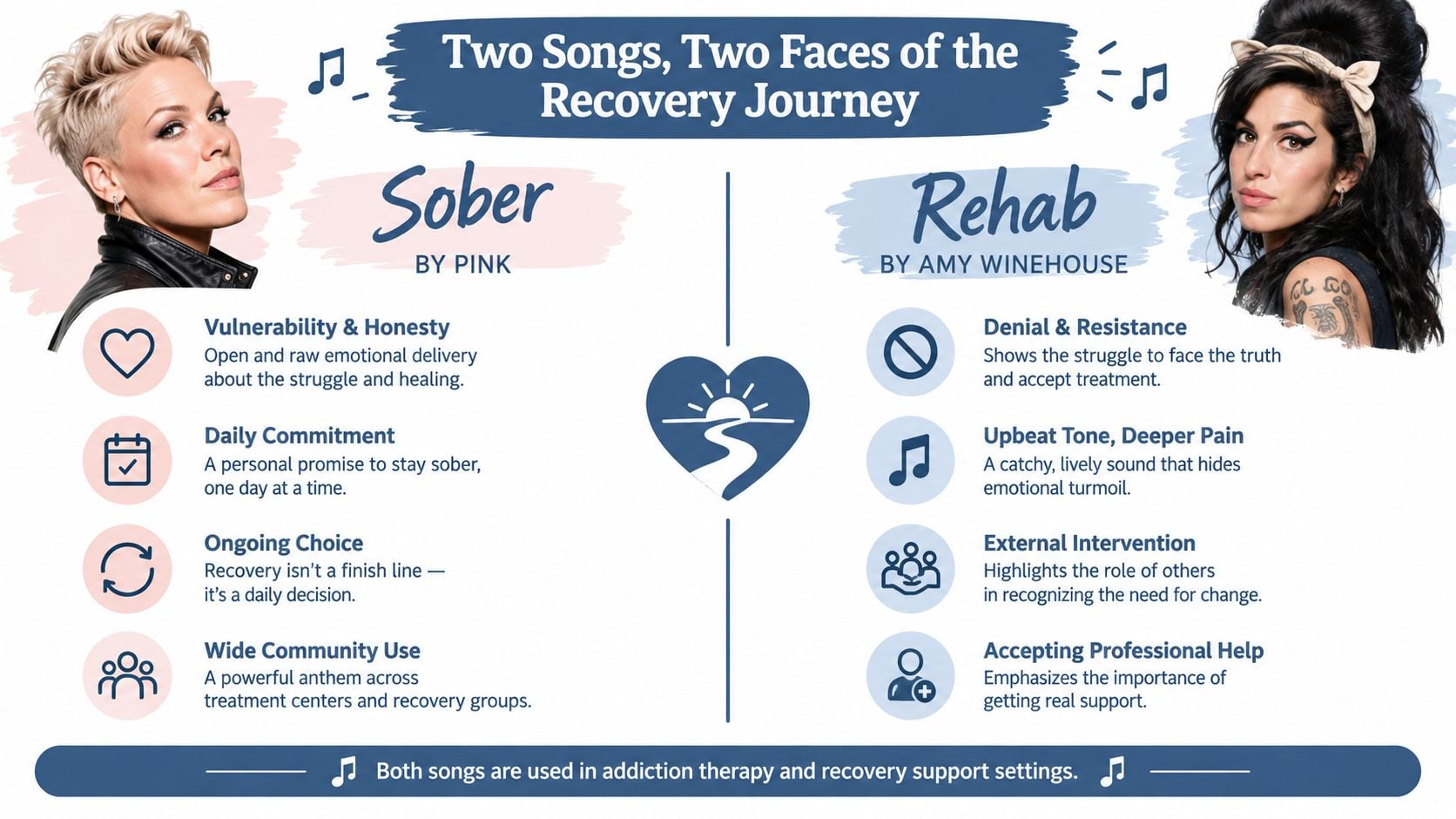
Pink's “Sober” presents recovery as an honest confrontation with dependency and the daily work of choosing a different direction. Its emotional force comes from vulnerability rather than certainty. The song can resonate with a person who recognizes that sobriety isn't a single finish line, but an ongoing commitment shaped by difficult decisions, changing relationships, and repeated efforts to stay aligned with recovery goals.
That makes it useful during early recovery, when motivation can shift from one hour to the next. A listener might use the song to journal about what sobriety means personally, what situations make commitment harder, and which people can offer support before a craving becomes overwhelming. A counselor may also use the track as an opening for discussion, but the song should never become a substitute for a relapse-prevention plan.
Practical rule: If the song increases agitation, shame, or an urge to use, turn it off and choose a grounding activity or supportive conversation instead.
Music deserves careful handling in substance use treatment. A clinical sample found that 43% of respondents said particular music increased their urge to use substances, with triggers including past-use associations, substance-related emotions, and lyrics about substance use, as reported in the study summary on music and addiction treatment. That finding doesn't make “Sober” unsafe for everyone. It shows why personal history matters more than a universal recovery playlist.
For someone in Massachusetts who needs structured support, intensive outpatient therapy at Cedar Hill Behavioral Health can provide a setting where music-related reactions are discussed alongside therapy and recovery planning.
2. Rehab by Amy Winehouse, resistance and the journey to acceptance
Amy Winehouse's “Rehab,” released in 2003, offers a sharply different recovery lens. Its lively presentation contrasts with the seriousness of resisting treatment, creating space to examine denial, fear, ambivalence, and the reasons a person may postpone professional help. For someone who has felt pressure from family, friends, or clinicians, the song can prompt a more honest question: what does acceptance look like now?
The track may also help families discuss treatment resistance without reducing a loved one to a label. A person can recognize harmful substance use and still fear withdrawal, stigma, loss of control, or the disruption of everyday responsibilities. Those concerns deserve compassionate assessment, not ridicule. Family therapy or an individual session can help separate understandable fear from the beliefs that keep someone stuck.
The song can open a conversation about resistance, but it shouldn't be used to mock someone who isn't ready for treatment.
This track requires particular caution because songs about substance use can function as personal cues. A review of music-based treatment research found that music therapy added to standard care likely reduces craving, while showing no clear evidence for improvements in depression, anxiety, or treatment retention, as described in the Cochrane review of music therapy for substance use disorders. The evidence supports a specific role for structured music interventions, not the idea that every song about addiction is therapeutic.
Listeners can reflect on whether their perspective toward treatment has changed, then bring that reflection to a therapist. The abstinence violation effect and recovery can also be discussed with a treatment professional when shame after a lapse threatens to become a reason to abandon care.

3. Unwell by Matchbox Twenty, living with mental health challenges in recovery
Anxiety may surface during a quiet morning, depression may make routine tasks feel distant, or trauma symptoms may intensify after substance use stops. Matchbox Twenty's “Unwell,” released in 2002, gives language to feeling misunderstood and emotionally unsettled. For someone who has used substances to manage panic, low mood, insomnia, or overwhelming thoughts, that recognition can begin a more honest conversation.
The track is most useful as a reflection exercise, not a diagnosis. Before listening, choose a calm setting and decide whether to stop if memories, cravings, or distress become stronger. Afterward, record the feelings that appeared, when they tend to arise, and which forms of support have helped. A therapist or clinician can then examine whether symptoms relate to a mental health condition, trauma, withdrawal, medication effects, or another cause.
A treatment team might organize that discussion around three questions:
- Name the experience: Is the strongest feeling anxiety, sadness, shame, anger, loneliness, or confusion?
- Identify the pattern: Does it appear before substance use, after use, during withdrawal, or independently?
- Choose support: Would therapy, a psychiatric appointment, a peer meeting, or contact with a trusted person provide the safest next step?
These questions turn the song into a map for observation. They do not replace clinical assessment, especially when symptoms include suicidal thoughts, severe confusion, hallucinations, or an inability to stay safe.
The Cochrane review on music therapy for substance use disorders found likely reductions in craving and improvements in motivation for treatment or change, while not establishing music as treatment for co-occurring mental health symptoms. A song may make disclosure easier, but stabilization usually calls for individualized care.
People seeking help for addiction alongside mental health symptoms can explore dual-diagnosis treatment at Cedar Hill Behavioral Health as one treatment pathway. Listening with a trusted person or clinician can add support when the track feels emotionally intense.

4. Beautiful Day by U2, finding hope and purpose in recovery
U2's “Beautiful Day,” released in 2000, can support a perspective shift when recovery feels defined only by restriction, regret, or what has been lost. Its hopeful energy fits moments when a person wants to notice the present without denying the past. Recovery often involves rebuilding ordinary sources of meaning, including routines, relationships, health, work, creativity, and time spent without intoxication.
A morning listening practice can make the song more useful than passive background music. The listener might play it during a walk, write down a few concrete things that made the day manageable, or use it before a difficult appointment. The purpose isn't forced positivity. Gratitude shouldn't erase grief, financial stress, psychiatric symptoms, or the consequences of addiction. It can widen attention enough to notice that pain and possibility can exist together.
Treatment professionals may also use hopeful music in mindfulness or group exercises, but the activity should match the person's emotional state. Someone experiencing acute despair may need direct clinical assessment and immediate support rather than an upbeat track. Someone feeling emotionally flat may find a hopeful song helpful as a gentle prompt toward engagement.
A 2019 article on music, social connection, and recovery emphasizes the social role of making music with others, including psychosocial integration and social cohesion. That insight extends beyond listening. Singing, drumming, songwriting, or discussing a meaningful track with safe peers may help a person experience recovery as connected rather than solitary.
Listeners can pair “Beautiful Day” with a gratitude journal, a recovery meeting, or a plan for one purposeful action. Hope becomes more durable when it leads to behavior, such as attending therapy, calling a support person, or keeping a medical appointment.

5. Scars to Your Beautiful by Alessia Cara, self-acceptance and healing
Alessia Cara's “Scars to Your Beautiful,” released in 2015, speaks to self-acceptance, shame, and the pressure to appear unaffected. In addiction recovery, “scars” can include damaged trust, health consequences, trauma symptoms, strained family relationships, or memories that a person wishes could disappear. Some marks remain invisible to everyone else, yet they can shape how a person sees the future.
This song can support trauma-informed reflection because it doesn't require perfection before someone deserves care. A listener might write about the difference between accountability and self-punishment. Accountability identifies harm, accepts responsibility, and supports changed behavior. Self-punishment keeps a person trapped in shame, which can increase isolation and make it harder to ask for help.
A gentler way to listen
The song may fit a journaling exercise, an individual therapy session, or a self-compassion practice. The listener could write three responses:
- What happened: Which parts of the recovery story need honest acknowledgment?
- What changed: Which behaviors, boundaries, or relationships are different today?
- What support is needed: What would make continued healing more realistic?
The track can also be meaningful in women's-specific care, identity work, and discussions about body image or the relationship between appearance, trauma, and substance use. Still, a song about acceptance may bring painful memories to the surface. Listening alone may not be appropriate when shame, dissociation, or urges to self-harm become stronger.
Music-based work is most responsible when a trained clinician helps the listener regulate afterward. A 2017 systematic review found beneficial effects across some emotional, motivational, participation, and perceived-helpfulness outcomes, but it also reported inconsistent results and no consensus on overall efficacy in the review of music therapy and substance use interventions. Self-compassion can support recovery, but it works alongside treatment rather than replacing it.

6. Someone You Loved by Lewis Capaldi, processing loss and connection in recovery
A person may finish treatment and suddenly notice what substance use took away: a relationship, family role, physical health, housing, trust, time, or a former sense of identity. Lewis Capaldi's “Someone You Loved,” released in 2018, gives those losses room to be named. Without substances numbing every feeling, grief can seem sharper and more immediate.
The song can support grief work when the listener has enough stability and support to tolerate sadness. Try it during a planned session, with a journal and a trusted person available. Write the name of someone or something lost, then separate what remains unresolved from what may be repaired. Some losses need mourning, not fixing. Family therapy can help turn that distinction into safer conversations about boundaries, accountability, and possible reconnection.
Music is also part of daily life in treatment settings. A hospital sample found that many participants listened to music for extended periods, often alone, according to reported clinical sample findings. Solitary listening may create space for reflection, yet it can also feed rumination, isolation, or craving. The relevant question is not whether the song is “good” for recovery, but what it does to this listener in this moment.
Grief deserves company when the emotion feels too large to manage safely.
Choose a steady setting and avoid the track alone if it repeatedly intensifies distress. Pair listening with a local treatment pathway, such as a group session, therapist appointment, peer-support meeting, or call to a trusted person. A grounding routine can provide the next point of contact after the song ends. Headphones create privacy, not isolation; recovery still depends on safe connection.
7. Rise Up by Andra Day, resilience, perseverance, and action
On a day when recovery feels physically or emotionally exhausting, Andra Day's “Rise Up,” released in 2015, can give perseverance a recognizable shape. Its message supports continuing with the next safe action even when confidence is low and the future is unclear. The song may help with reflection, but it cannot replace treatment, crisis support, or medical care.
Use it as part of relapse-prevention planning rather than as a general command to “be strong.” Before a high-risk social situation, play it while reviewing transportation, identifying whom to call, and confirming an exit plan. During temptation, pair the track with one immediate behavior, such as contacting a sponsor, attending a meeting, or reaching out to the treatment team. Music can reinforce an intention, while withdrawal, access to substances, and acute psychiatric symptoms require professional support.
A recovery playlist built around “Rise Up” can serve different functions:
- For urgency: Choose music that creates a pause before acting.
- For connection: Include a song linked with safe people or supportive groups.
- For grief: Select music that permits sadness without strengthening substance-use memories.
- For confidence: Add a track that recalls skills already practiced.
The review's analysis of intervention duration found stronger craving reductions in music-therapy interventions lasting one to three months than in single-session formats. This supports a practical idea: repeated listening within a structured plan may be more useful than one powerful emotional experience. A clinician can help assess whether “Rise Up” supports emotional regulation or has become a cue for distress, pressure, or craving.
Try the song in a steady setting, and avoid listening alone if it repeatedly intensifies distress. Afterward, write one action, one person to contact, and one treatment connection to use locally, such as a therapist, meeting, or treatment team. Let the song bridge emotion to action. Recovery is built through the next safe choice, repeated with support.
8. The Middle by Jimmy Eat World, perspective, patience, and long-term recovery vision
Jimmy Eat World's “The Middle,” released in 2001, offers a message of patience that can help when recovery feels too slow. People often expect emotional relief, restored trust, or stable routines to appear quickly. In reality, recovery develops through repeated practice, and progress can be difficult to recognize while someone is still living through the uncomfortable middle.
The song can support long-term thinking without minimizing present problems. A listener might ask what kind of life is being built beyond immediate symptom relief, then identify a small goal related to health, relationships, education, employment, or daily structure. A treatment team can use that discussion to review whether the current level of care remains appropriate and what support may be needed as independence increases.
Turning patience into a recovery plan
The track may be useful during PHP or IOP programming, especially when a person feels frustrated by treatment timelines. A journal entry could explore three perspectives:
- Current position: What has changed since treatment began?
- Unfinished work: Which symptoms, triggers, or relationship issues still need attention?
- Long-term direction: What would a meaningful, substance-free life include?
A 2022 review found that music therapy added to standard care likely reduces craving and increases motivation for treatment or change, while showing no meaningful overall retention benefit, as summarized in the Cochrane evidence review. That distinction reinforces a realistic message. Music may help someone engage with treatment, but continued care depends on clinical fit, safety, support, and personal circumstances.
“The Middle” is best used as a perspective tool, not a promise that every problem will resolve automatically. Revisit it when impatience rises, then discuss the reaction with a therapist or care team. Long-term recovery becomes more credible when hope is paired with planning.
8-Song Recovery Themes Comparison
| Song (Artist) | Implementation complexity | Resource requirements | Expected outcomes | Ideal use cases | Key advantages |
|---|---|---|---|---|---|
| Sober (Pink) | Low–Medium, emotionally intense; may need facilitator | Therapist or peer support, journaling prompts | Increased personal accountability and renewed commitment | Early recovery, group sessions, relapse reminders | Validates struggle and empowers ongoing choice |
| Rehab (Amy Winehouse) | Medium, may reinforce denial if unmanaged | Family therapist or educator, guided discussion | Greater insight into denial and barriers to treatment | Family therapy, intervention planning, education on resistance | Clarifies denial dynamics; prompts reflection on accepting help |
| Unwell (Matchbox Twenty) | Medium, best used with clinical context | Integrated treatment team, dual-diagnosis specialists | Recognition of co‑occurring disorders and reduced stigma | Dual-diagnosis programs, individual therapy addressing mood/anxiety | Validates mental health needs; promotes holistic care |
| Beautiful Day (U2) | Low, uplifting but may feel premature for some | Mindfulness facilitator or self-led gratitude practice | Increased hope, motivation, and present-moment awareness | Morning mindfulness, gratitude exercises, milestone celebrations | Energizes and supports gratitude-based recovery work |
| Scars to Your Beautiful (Alessia Cara) | Low–Medium, benefits from trauma-informed framing | Trauma-informed therapist, self-compassion exercises | Reduced shame, improved self-acceptance and identity work | Self-esteem groups, trauma-informed workshops, women's programs | Encourages authenticity and normalizes visible/invisible healing |
| Someone You Loved (Lewis Capaldi) | Medium, can trigger intense grief; use safely | Therapist support, safe environment, family or group therapy | Facilitated grief processing and strengthened connection | Grief work, family therapy, group discussions on relational impact | Validates loss and fosters community repair and support |
| Rise Up (Andra Day) | Low, highly motivational but may misalign in crisis | Peer support, relapse-prevention tools, action planning | Increased resilience, motivation to take recovery actions | Relapse prevention, motivational groups, pre-challenge preparation | Strong inspirational message that promotes action and perseverance |
| The Middle (Jimmy Eat World) | Low, cognitive framing useful for perspective work | Psychoeducation, goal-setting exercises, clinician guidance | Greater patience, long-term perspective, reduced pressure to "fix" | Early recovery education, IOP/PHP groups, goal-setting sessions | Normalizes recovery timeline and supports grounded hope |
Turn a Meaningful Song Into a Next Step
A song can help a person identify an emotion, remember a value, or begin a conversation that has felt impossible to start. It can't diagnose addiction, manage dangerous withdrawal, guarantee sobriety, or replace individualized behavioral health care. Research supports a careful role for music. A 2022 Cochrane review of 21 studies involving 1,984 participants found that music therapy added to standard care likely reduced substance craving with a moderate-certainty medium effect size, with an SMD of -0.66, and increased motivation for treatment or change, with an SMD of 0.41. The same review found no meaningful effect on treatment retention, with an RR of 0.99 and a 95% confidence interval from 0.93 to 1.05, as reported in the full Cochrane review.
Those findings don't mean every recovery song will help every listener. Music connected to past use can increase craving, while music associated with sobriety may support motivation or emotional processing. The safest playlist is personal, flexible, and reviewed when reactions change. A person in early recovery may need different music from someone working through grief, co-occurring anxiety, trauma, or long-term relapse prevention.
A practical listening approach can keep reflection safer:
- Choose a song that matches an emotion the listener can manage today.
- Listen in a supportive setting, especially when grief, shame, or craving has been intense.
- Write down the memories, body sensations, thoughts, and urges that appear.
- Stop the track if distress escalates rather than treating discomfort as a test of strength.
- Contact a trusted person or treatment professional after a difficult reaction.
- Keep songs associated with substance use separate from songs intended for recovery support.
Music therapy remains an adjunct rather than a universal standard in addiction treatment. A U.S. survey found that 14.7% of substance-use treatment programs offered music therapy, compared with 36.8% offering art therapy, according to the survey published in the National Library of Medicine. That limited adoption makes therapist training, clinical supervision, and individualized implementation important.
For Massachusetts adults and families seeking timely care, Cedar Hill Behavioral Health is a leading treatment center in Massachusetts with same-day admissions and a continuum that includes Partial Hospitalization, Intensive Outpatient, and Outpatient programs. Its individualized, science-backed approach combines individual, group, and family therapy with cognitive behavioral therapy, mindfulness, music and art therapy, and thoughtful medication management. Licensed mental health and medical professionals support people facing anxiety, depression, bipolar disorder, borderline personality disorder, OCD, PTSD, and other mood disorders.
Cedar Hill also provides insurance verification and payment-plan availability for self-pay clients. Adults exploring recovery can call (508) 310-4580 for prompt guidance about same-day admissions, PHP, IOP, or outpatient care. More information about treatment options is available at Cedar Hill Behavioral Health, and readers seeking adjacent information can also review this resource on non-alcoholic wine.
Cedar Hill Behavioral Health offers individualized PHP, IOP, and outpatient care, with therapy, mindfulness, music and art therapy, medication management, insurance verification, and payment-plan options. Massachusetts readers who want support beyond songs about recovery from addiction can visit Cedar Hill Behavioral Health or call (508) 310-4580 to request guidance about beginning care.