
A new antidepressant prescription can bring relief and uncertainty at the same time. A patient may leave the first appointment wondering whether nausea is normal, whether a tired morning means the medication is wrong, and how long to wait before asking for a change. The most important point is that medication management for depression is a timeline-driven process, not a one-time decision to take a pill and hope.
Clinicians use scheduled reviews to judge benefit, side effects, safety, adherence, and the possibility that another diagnosis or treatment strategy needs attention. Knowing what usually happens at 2 weeks, 4 weeks, 6 to 8 weeks, and beyond helps patients ask better questions and recognize when a treatment plan needs adjustment.
Table of Contents
- What Medication Management for Depression Involves
- How Clinicians Build and Run a Medication Plan
- The Main Medication Classes and How the First Choice Gets Made
- The Decision Timeline at 2 Weeks, 4 Weeks, and Beyond
- Safety Monitoring, Side Effects, and Suicide Risk
- Combining Medication With Therapy and Levels of Care
- Adherence, Tapering, Access, and Getting Started in Massachusetts
What Medication Management for Depression Involves
At a first appointment, you may arrive with practical worries: Will nausea mean the medication is wrong? How long should you wait before reporting a problem? What happens if the first choice does not help? A psychiatrist or psychiatric nurse practitioner starts by asking about low mood, loss of interest, sleep, appetite, energy, concentration, anxiety, substance use, medical conditions, and suicidal thoughts. The review also includes previous medication trials, current prescriptions, allergies, family history, and any period of unusually high energy or decreased need for sleep.
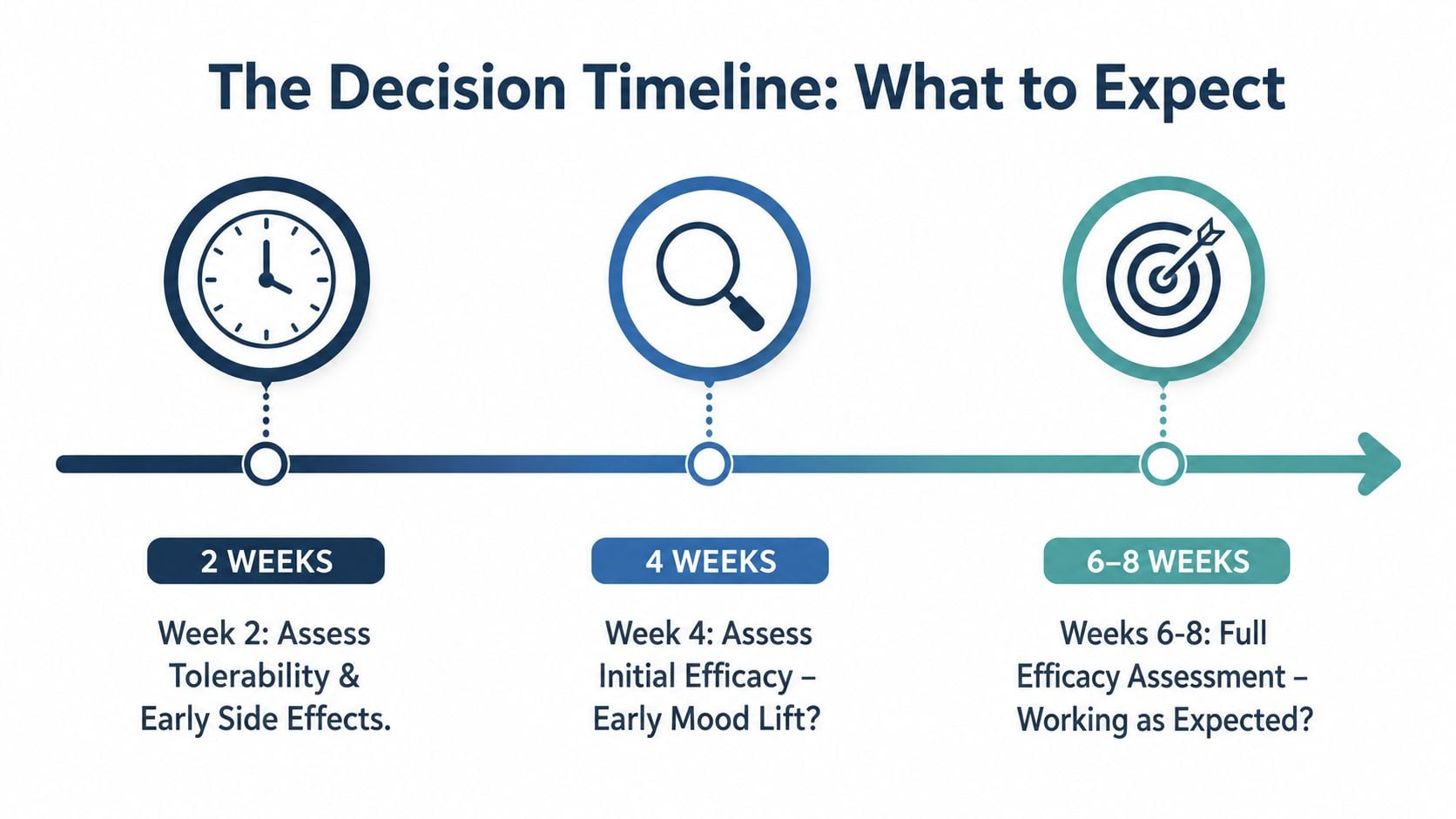
That first conversation creates a starting map. The clinician can then compare changes at two weeks, four weeks, six weeks, and later visits instead of judging treatment from one difficult day. This timeline helps separate an early side effect from a lasting problem and shows when waiting, adjusting, or changing course makes sense.
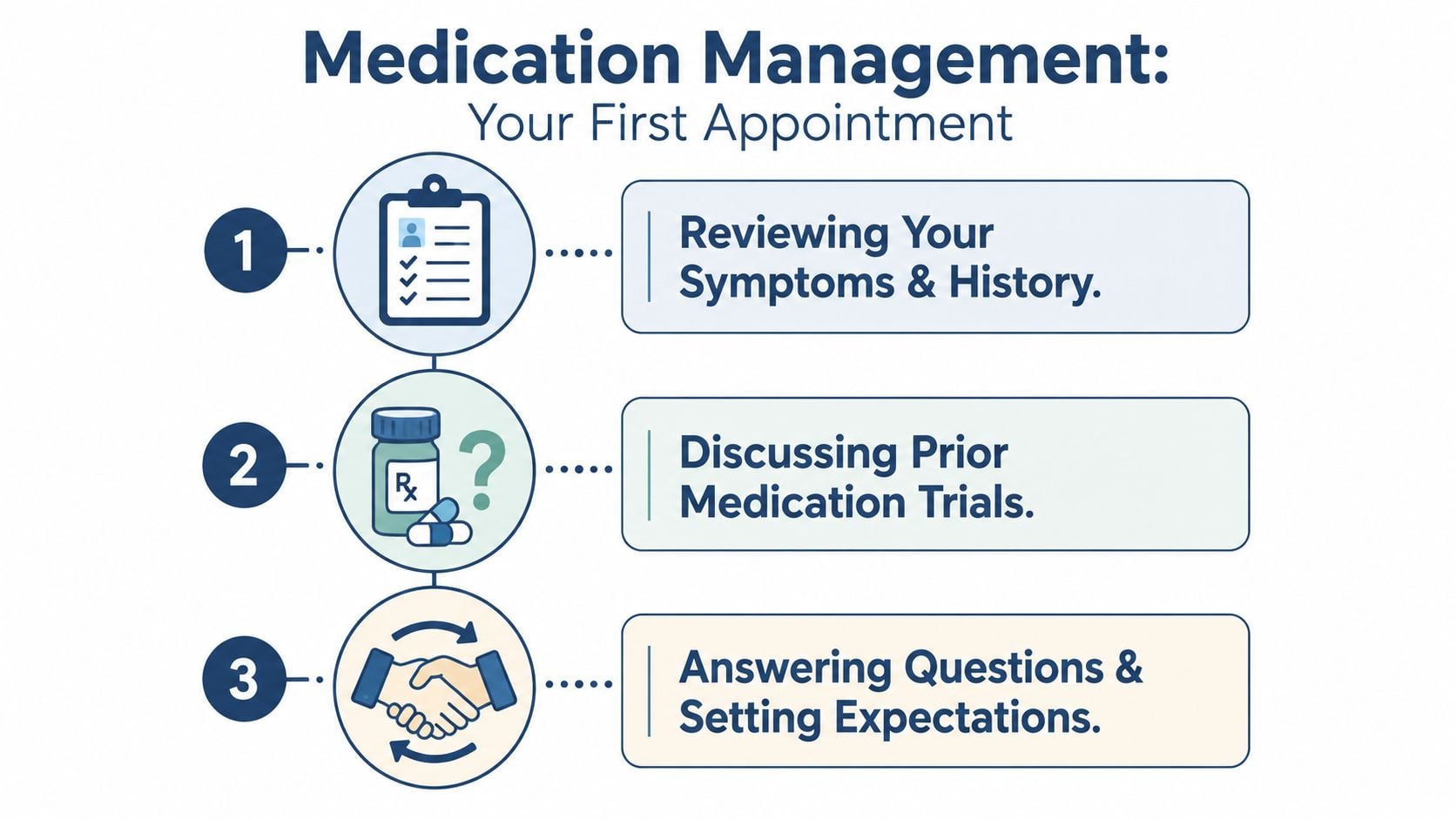
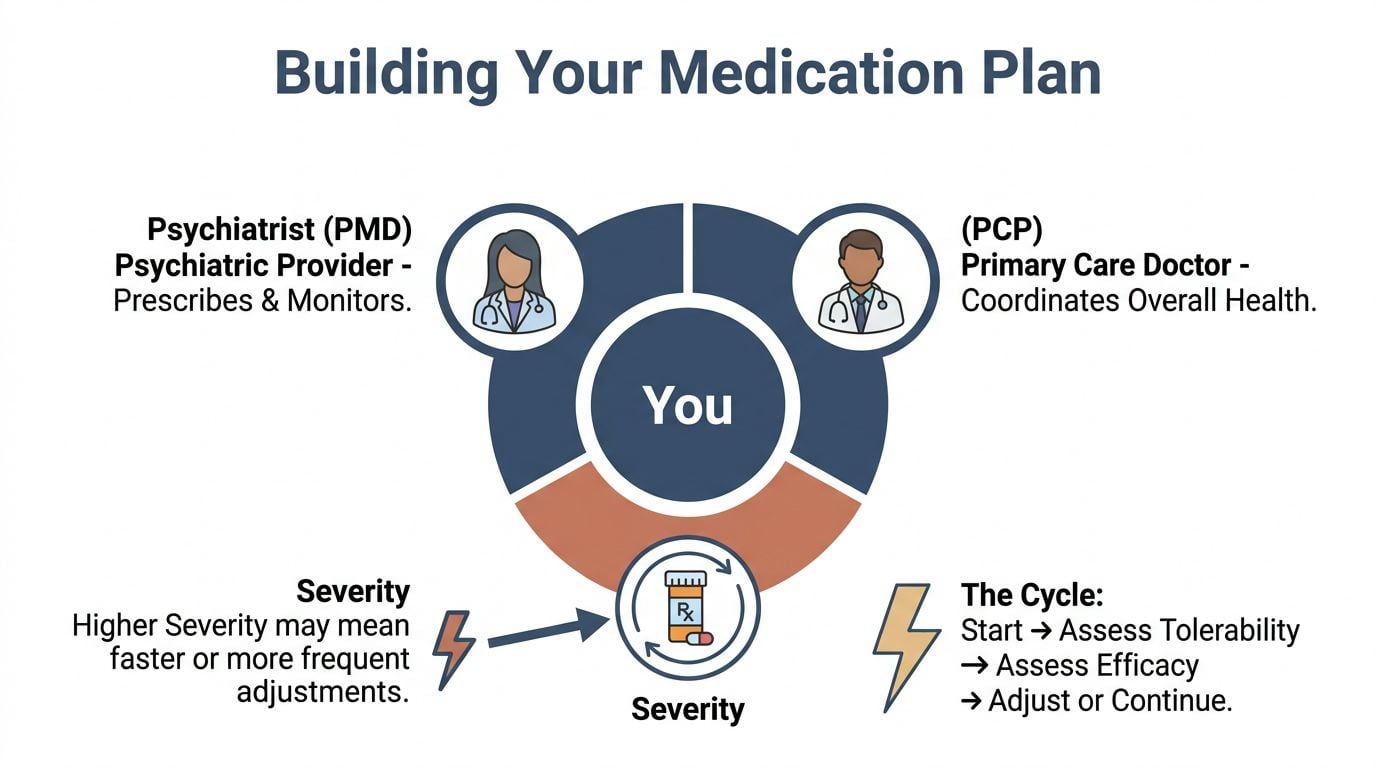
Medication management is a repeating process. The prescriber assesses symptoms, selects or adjusts medication, checks tolerability, measures progress, and schedules the next review. A therapist may track behavior, coping, and emotional patterns. A primary care clinician can coordinate treatment with medical conditions, and a pharmacist may identify interactions, duplicate therapy, or refill problems.
The first appointment creates a baseline
Early visits may occur weekly when symptoms are severe, safety concerns are present, or a medication has just started. Many patients then move to reviews every 2 to 4 weeks, with monthly or less frequent appointments after treatment becomes stable. The schedule depends on risk, diagnosis, medication, side effects, and access to care.
At each review, the clinician may compare symptoms with the starting point, use a rating scale such as the PHQ-9, ask about sleep and daily function, review missed doses, and decide whether to keep or increase the dose. A patient who remains depressed but sleeps better may be showing an early treatment signal. Agitation, worsening suicidal thoughts, or unusually high energy calls for prompt reassessment.
Severity also affects the pace. Mild depression may be managed with therapy, behavioral support, or careful observation. Moderate or severe depression may require earlier medication treatment, closer follow-up, or a higher level of care. A structured psychiatric evaluation for medication can clarify those choices.
Practical rule: Every medication review should answer three questions: what has changed, what has been difficult, and what happens next?
A routine safety check for medications can also help patients understand the medication, health-history, interaction, and safety questions that belong in a thorough review.
How Clinicians Build and Run a Medication Plan
You begin treatment feeling exhausted, worried, and unsure whether medication will help. The clinician does not treat that first prescription as a permanent decision. Medication management works more like adjusting blood pressure treatment: establish a baseline, start carefully, schedule checkpoints, examine the readings, and change the plan when the response or side effects call for it.
The repeating clinical cycle
The process usually follows a sequence:
Collect a baseline. The clinician records mood, anxiety, sleep, appetite, concentration, work or school function, physical symptoms, suicidal thinking, and relevant medical history. A symptom scale can make changes easier to compare over time.
Choose a target. The goal might be better sleep, fewer panic symptoms, restored daily function, or a meaningful reduction in depression. When the dose is appropriate and adherence is good, a practical benchmark is at least 50% improvement by 6 to 8 weeks, as described in this review of depression pharmacotherapy decisions.
Select and start treatment. The clinician considers symptoms, prior response, medical conditions, interactions, pregnancy or lactation considerations, and your preferences. A lower starting dose may be sensible when side effects or medical complexity are concerns.
Set the checkpoint. Before you leave, clarify when the next review will happen, which changes require an earlier call, and how refills will be handled. This turns an uncertain waiting period into a plan.
Reassess and adjust. At follow-up, the clinician reviews benefit, tolerability, adherence, and whether the working diagnosis still fits. The next choice may be to continue, increase, switch, or augment treatment.
Severity changes the speed of the plan
Mild depression with stable safety may allow time for psychotherapy or behavioral changes before medication is added. Moderate-to-severe depression may call for medication and therapy together, consistent with World Health Organization guidance on depression treatment. Severe depression, psychotic features, inability to meet basic needs, or immediate safety concerns can require faster decisions and a more intensive setting.
The patient, prescriber, therapist, and primary care clinician each notice different parts of the picture. A coordinated outpatient psychiatry medication management program can bring those observations into one plan, especially when depression overlaps with anxiety, chronic illness, or other psychiatric symptoms.
The Main Medication Classes and How the First Choice Gets Made
There isn't one universally best antidepressant. The first prescription usually balances expected benefit against side effects, other conditions, past medication response, interactions, pregnancy or lactation considerations, and the symptoms causing the greatest impairment.
Selective serotonin reuptake inhibitors, or SSRIs, are commonly considered first-line options because clinicians often find them practical to prescribe and monitor. Examples include sertraline, escitalopram, fluoxetine, paroxetine, and citalopram. Possible concerns include nausea, headache, sleep changes, sexual dysfunction, and weight changes.
Serotonin-norepinephrine reuptake inhibitors, or SNRIs, include venlafaxine, duloxetine, and desvenlafaxine. A clinician may consider this class when depression occurs with prominent anxiety, fatigue, or pain. Blood pressure, activation, sleep, and discontinuation symptoms may influence the choice and follow-up plan.
Atypical medications have distinct profiles:
- Bupropion can be activating and is often considered when sexual side effects are a major concern. It generally isn't chosen for patients with seizure disorders or eating disorders.
- Mirtazapine may fit depression accompanied by insomnia, poor appetite, or weight loss, although sedation and increased appetite can be limiting.
- Trazodone is often used at lower doses when sleep is a significant problem, rather than as the main antidepressant strategy.
Older tricyclic antidepressants and monoamine oxidase inhibitors can be effective, but side effects, overdose risk, cardiac concerns, and dietary or drug interactions often make them less convenient first choices. For people who don't respond sufficiently, clinicians may discuss adjunctive strategies involving medications such as aripiprazole, quetiapine, brexpiprazole, lithium, or thyroid treatment. Those options require individualized evaluation and monitoring.
Antidepressant classes at a glance
| Class | Examples | Commonly Chosen For | Key Trade-offs |
|---|---|---|---|
| SSRIs | Sertraline, escitalopram, fluoxetine, paroxetine, citalopram | Broad depression treatment, often with anxiety | Nausea, sleep changes, sexual dysfunction, weight changes |
| SNRIs | Venlafaxine, duloxetine, desvenlafaxine | Depression with anxiety, fatigue, or pain | Activation, sleep effects, blood pressure considerations, withdrawal concerns |
| Atypical agents | Bupropion, mirtazapine, trazodone | Sexual side-effect concerns, insomnia, poor appetite, or sleep problems | Activation, sedation, appetite changes, and condition-specific cautions |
| TCAs | Several older tricyclic medications | Selected cases, including difficult-to-treat depression | Anticholinergic effects, sedation, cardiac and overdose risks |
| MAOIs | Older monoamine oxidase inhibitors | Selected treatment-resistant cases | Significant interaction and dietary restrictions |
| Augmentation options | Aripiprazole, quetiapine, brexpiprazole, lithium, thyroid | Incomplete response after reassessment | Additional monitoring, side effects, and interaction considerations |
The medication name matters, but the reasoning behind the choice matters more. A patient who understands the target symptom and the main trade-off can participate in a safer, more realistic plan.
The Decision Timeline at 2 Weeks, 4 Weeks, and Beyond
The first follow-up can feel too soon. A patient may still feel depressed, yet the clinician is already collecting information that guides the next decision. Each checkpoint asks something different: Is the medication safe to continue? Is there an early signal of benefit? Should the plan stay the course, change, or gain another treatment?
Around 2 weeks
The early review examines tolerability, side effects, adherence, symptom direction, and suicidal ideation. Full mood improvement may not have appeared. Changes in sleep, energy, appetite, anxiety, or daily activity still help show whether the medication is being tolerated and whether symptoms are beginning to shift.
The American Psychiatric Association describes an early structured review, usually within 2 weeks, with follow-up frequency adjusted to clinical risk. Patients should contact their clinician sooner if suicidal thoughts intensify, severe agitation appears, or a serious physical reaction develops. Waiting for the scheduled appointment is not appropriate in those situations.
Around 4 weeks
At 4 weeks, the clinician looks for early benefit and asks whether the dose has been high enough, for long enough, to judge fairly. Improvement of at least 25% after 4 weeks generally supports continuing the medication and adjusting it toward the maximum tolerated dose.
If improvement is under 25%, the next step is an examination of the plan rather than an automatic switch. The review may cover missed doses, interactions, side effects, the diagnosis, and whether the medication matches the person's symptoms. The APA depression guideline provides the clinical framework for reassessing an insufficient early response.
At 6 to 8 weeks and afterward
If improvement remains under 50% after 6 to 8 weeks at an optimal dose with good adherence, the clinician may consider switching or augmentation. Depending on the situation, APA guidance also supports switching medication or adding psychotherapy or another medication strategy when response remains insufficient after 4 to 6 weeks of pharmacotherapy. The decision depends on benefit, side effects, risk, and the patient's preferences.
After an acute response, continuation commonly lasts 16 to 24 weeks, or roughly 6 to 9 months from treatment initiation, to reduce relapse risk. Recurrent, severe, or chronic episodes may require maintenance treatment lasting 2 years or longer. These timeframes are planning points, not automatic stop dates.
Safety Monitoring, Side Effects, and Suicide Risk
Safety monitoring makes medication management understandable rather than frightening. Most side effects are discussed as possibilities to track, not as predictions that a patient will experience them.
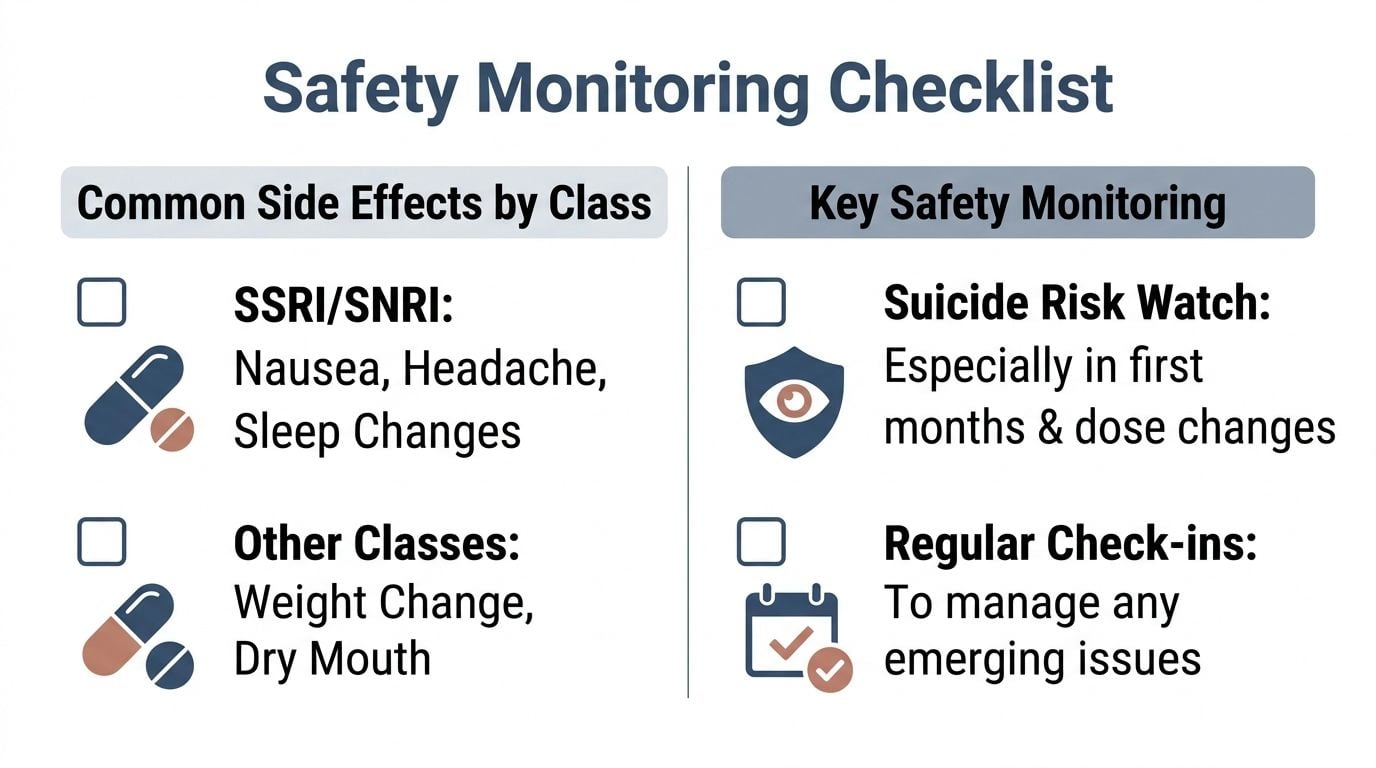
SSRIs and SNRIs may cause nausea, headache, sleep changes, sexual dysfunction, or weight shifts. Bupropion may feel activating, while mirtazapine may cause sedation or increased appetite. Tricyclic medications can create anticholinergic effects, sedation, cardiac risks, and greater danger in overdose. MAOIs require careful attention to dietary and medication interactions.
What clinicians monitor
The review may include blood pressure, heart rate, weight, sleep, agitation, sexual side effects, and other physical symptoms. Depending on the medication and medical history, the prescriber may order laboratory testing or an ECG. The APA specifically recommends ECG monitoring at baseline and again at the final dose for patients with cardiovascular disease or QT-risk exposure, including people taking QT-prolonging medications such as citalopram or escitalopram, as outlined in the APA depression guideline.
Patients should provide a complete list of prescriptions, over-the-counter drugs, supplements, and substances. Serotonergic combinations, NSAIDs, alcohol, and cannabis may affect safety or tolerability, so the prescriber needs accurate information without judgment. Sleep also belongs in the conversation because your bed influences your mood, and poor rest can complicate interpretation of medication response.
Suicide risk needs direct questions
Some patients experience increased suicidal thinking early in treatment or after dose changes, particularly younger patients covered by antidepressant safety warnings. That possibility doesn't mean antidepressants should be avoided, but it does mean the plan should include frequent contact, a written safety plan, family or trusted support when appropriate, and clear instructions for urgent help.
New or worsening suicidal thoughts, intent, preparation, or dangerous behavior require immediate clinical escalation. A patient or family member can use Cedar Hill's support for suicidal thoughts to identify the next step, but imminent danger requires emergency services or the nearest emergency department.
Safety comes before the calendar. A scheduled follow-up date never replaces urgent help when risk changes.
Combining Medication With Therapy and Levels of Care
Medication can reduce biological symptoms, while psychotherapy helps a person change patterns that sustain depression. Cognitive behavioral therapy can address hopeless interpretations, interpersonal therapy can focus on relationship disruption and loss, and behavioral activation can rebuild routines through planned activity. The strongest plan often connects these approaches instead of asking medication to solve every problem.
Care intensity should match clinical need
Outpatient care may combine medication checks every few weeks or monthly with weekly individual therapy. This arrangement can suit patients who remain safe, can manage basic responsibilities, and can attend appointments consistently.
An Intensive Outpatient Program adds structured treatment several days each week, including group therapy and more frequent psychiatric contact, without an overnight stay. A Partial Hospitalization Program provides a fuller daytime structure, daily clinical contact, medication review, therapy, and crisis support for people who need more oversight than outpatient care but may not need inpatient hospitalization.
| Level of Care | Typical Schedule | Medication Oversight |
|---|---|---|
| Outpatient | Regular psychiatric appointments with ongoing therapy | Dose, side-effect, adherence, and refill reviews at scheduled visits |
| Intensive Outpatient Program | Structured groups and therapy on multiple days each week | More frequent psychiatric touchpoints and faster communication about changes |
| Partial Hospitalization Program | Several hours of treatment across most weekdays | Close team-based monitoring, regular medication review, and crisis planning |
| Inpatient care | Continuous hospital-based support | Intensive safety observation, medication decisions, and medical coordination |
The right level can change over time. A patient may step up from outpatient care during a crisis, then step down as sleep, safety, function, and medication tolerance improve. Therapy remains useful even after medication stabilizes mood because relapse prevention depends on skills, routines, and early recognition of warning signs.
Adherence, Tapering, Access, and Getting Started in Massachusetts
A medication plan only works if a patient can follow it in daily life. Missed doses may result from forgetfulness, side effects, cost, transportation problems, pharmacy shortages, confusing instructions, or uncertainty about whether the medication is helping. These are treatment barriers, not moral failures, and the prescriber needs to know about them early.
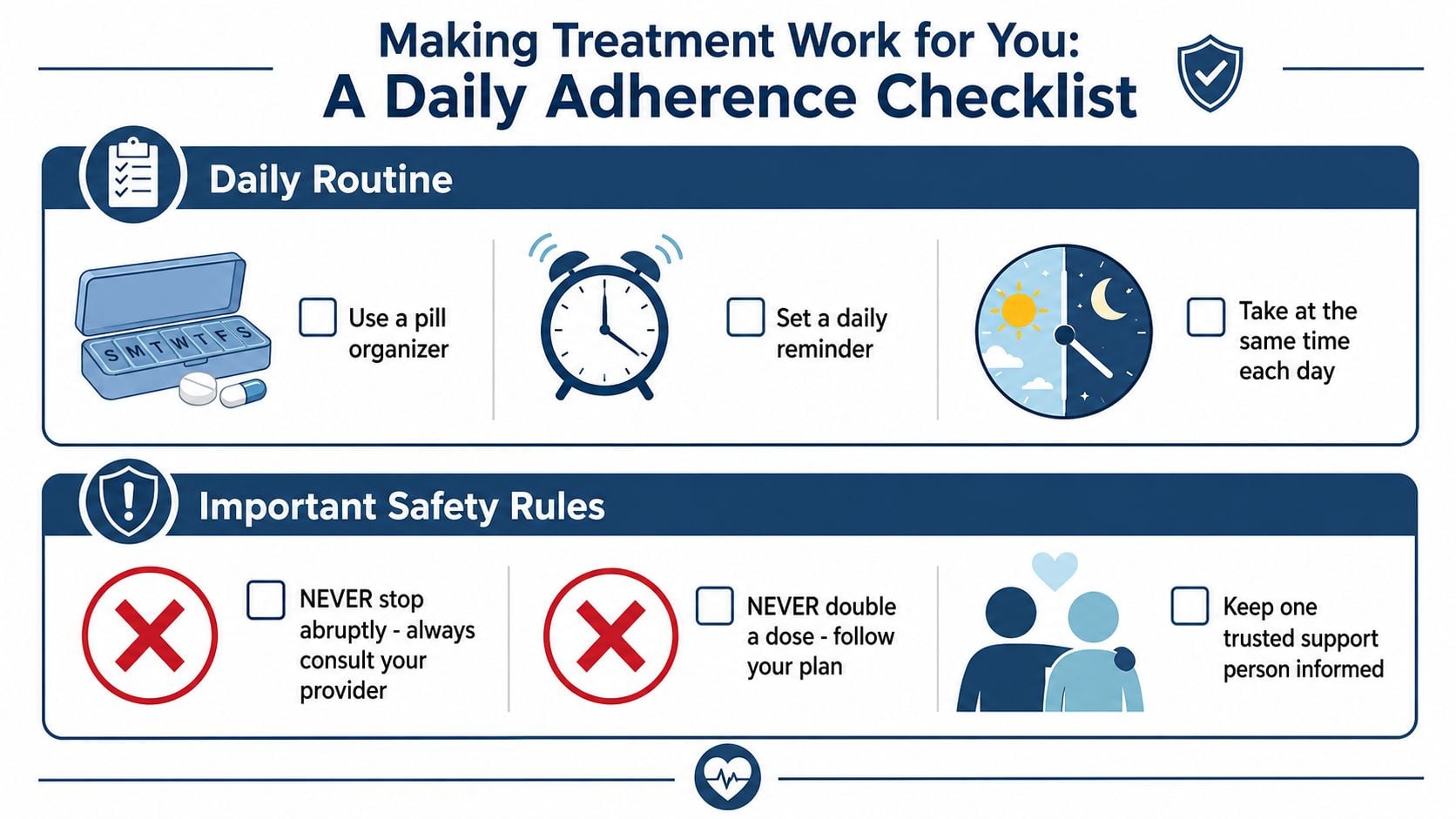
A simple routine can reduce avoidable gaps:
- Use one daily cue: Pair the medication with a consistent routine approved by the clinician.
- Prepare refills early: Use a pill organizer and refill reminders, and ask how much notice the pharmacy requires.
- Keep support informed: One trusted person can help notice changes in mood, sleep, agitation, or safety.
- Report obstacles: The clinical team may consider a different formulation, schedule, or delivery arrangement when appropriate.
- Follow missed-dose instructions: Patients shouldn't double a dose or change timing without clinical advice.
Tapering is a planned clinical decision
Antidepressants generally shouldn't be stopped abruptly after ongoing treatment. The pace depends on the medication, dose, duration of treatment, withdrawal symptoms, relapse risk, and the patient's history. A review of guideline recommendations reports that NICE advises gradual reductions every 1 to 2 weeks over roughly 4 weeks, while other guidance supports tapering over several weeks to a few months. Shorter half-life medications, including paroxetine and venlafaxine, deserve particular care, as described in this Cochrane review of discontinuation approaches.
Recent evidence supports a nuanced discussion rather than an alarmist one. A 2025 meta-analysis found about one additional discontinuation symptom at week 1 and found no evidence that mood worsening itself is a withdrawal symptom, while a 2026 network meta-analysis found that slow tapering with psychological support can be as effective as continuation for relapse prevention in remitted depression and better than abrupt or rapid stopping. Those findings don't make tapering automatic or identical for everyone. They support an individualized plan with symptom tracking and follow-up.
Massachusetts access can shape clinical continuity
People seeking treatment in Massachusetts may face prior authorization, formulary limits, step therapy, copays, pharmacy shortages, transportation barriers, or long waits for psychiatry. A coordinated intake can verify benefits, identify covered medication options, schedule an evaluation, and connect a patient with therapy or PHP, IOP, or OP care when needed.
At Cedar Hill Behavioral Health, intake gathers medical, psychiatric, and insurance information before an individualized appointment. Patients should ask what records to bring, how refills are handled, which laboratory tests or safety checks may be needed, and whom to contact between visits. Addressing these details early can prevent a lapse in medication or monitoring.
One 2026 primary-care protocol notes that almost three-quarters of patients treated for depression receive care only from primary care clinicians, while visits are often short and adherence monitoring is limited, as reported in this primary-care depression adherence protocol. The same source highlights the importance of the early treatment period, particularly for older adults, for whom prior evidence found nonadherence ranging from 29% to 40% in the United States. These figures reinforce a practical point: refill access, reminders, and communication belong inside the treatment plan.
The broader history shows why modern medication management emphasizes monitoring. After 1957, iproniazid and imipramine introduced the prototype MAOI and tricyclic classes, and by 1958, more than 400,000 patients with depression had been treated with the first antidepressant class to reach the market. In later U.S. practice, antidepressant use among patients with depression rose from 70% of visits in 1987 to 89% in 2001, while SSRI use expanded from 0% in 1987 to 69% in 2000, and tricyclic use fell from 47% to 2%, according to the CDC historical analysis of antidepressant use. Antidepressants remain common in adult care, with 13.2% of U.S. adults reporting use during 2015 to 2018, and 11.4% reporting prescription medication for depression in 2023, as summarized by the CDC data and later survey analysis. The NICE recommendations for depression also call for continuation after remission, regular review, and follow-up at least every 6 months for people continuing antidepressants.
If depression symptoms are worsening, suicidal thoughts are emerging, or medication access is about to lapse, the patient or family should contact the prescriber promptly rather than waiting for the next routine visit. Cedar Hill Behavioral Health offers psychiatric evaluation, medication management, therapy, and PHP, IOP, and OP support for adults in Massachusetts, with intake assistance for insurance and treatment placement. Visit Cedar Hill Behavioral Health to request guidance on the appropriate level of care and begin the admissions process.